Air Fryer Guides
Why Your Air Fryer Smokes and What to Do
A little mist escaping while vegetables cook can be ordinary steam. A lingering haze with a burnt smell is a different matter, and it deserves your attention before you carry on with dinner.
Grease, crumbs and dripping coatings can all contribute to smoke, but an unusual smell or a malfunction should never be brushed aside as just part of cooking. Here is how to tell the difference, what to do first and which everyday habits can help prevent it.
The images in this guide are AI-generated editorial illustrations.
By Esther LackiePublished
What to do immediately if your air fryer starts smoking
If you are not sure whether you are seeing steam or smoke, stop cooking rather than trying to diagnose it while the appliance keeps heating.
- 01
Switch off and disconnect power if safe
Switch off the appliance and disconnect power at the socket if you can do so safely. Do not reach through smoke or flames, touch a damaged or dangerously hot plug, or put yourself at risk to unplug it.
- 02
Keep a suspected fire closed
If there are flames, heavy smoke or a suspected fire inside, do not open the drawer or door. Do not move the appliance, pour water into it or try to carry it outside. Leave the area, get everyone out and call your local fire and rescue service from a safe place. Do not delay leaving to disconnect power.
- 03
Wait before inspecting
Only when there is no suspected fire, the smoke has stopped and the disconnected appliance has cooled fully should you inspect accessible removable parts. Keep children and pets away. Do not breathe the smoke deliberately or lean over vents to smell it.
- 04
Decide whether it is safe to use again
A clear cooking cause, such as old grease in an otherwise undamaged basket, may be addressed by cleaning according to the manual. Do not restart an appliance with persistent or unexplained smoke, a burning electrical or plastic smell, or signs of malfunction. Contact the manufacturer or retailer before using it again.
Source: Electrical Safety First, Air fryers usage and safety
Steam or smoke: what is the difference?
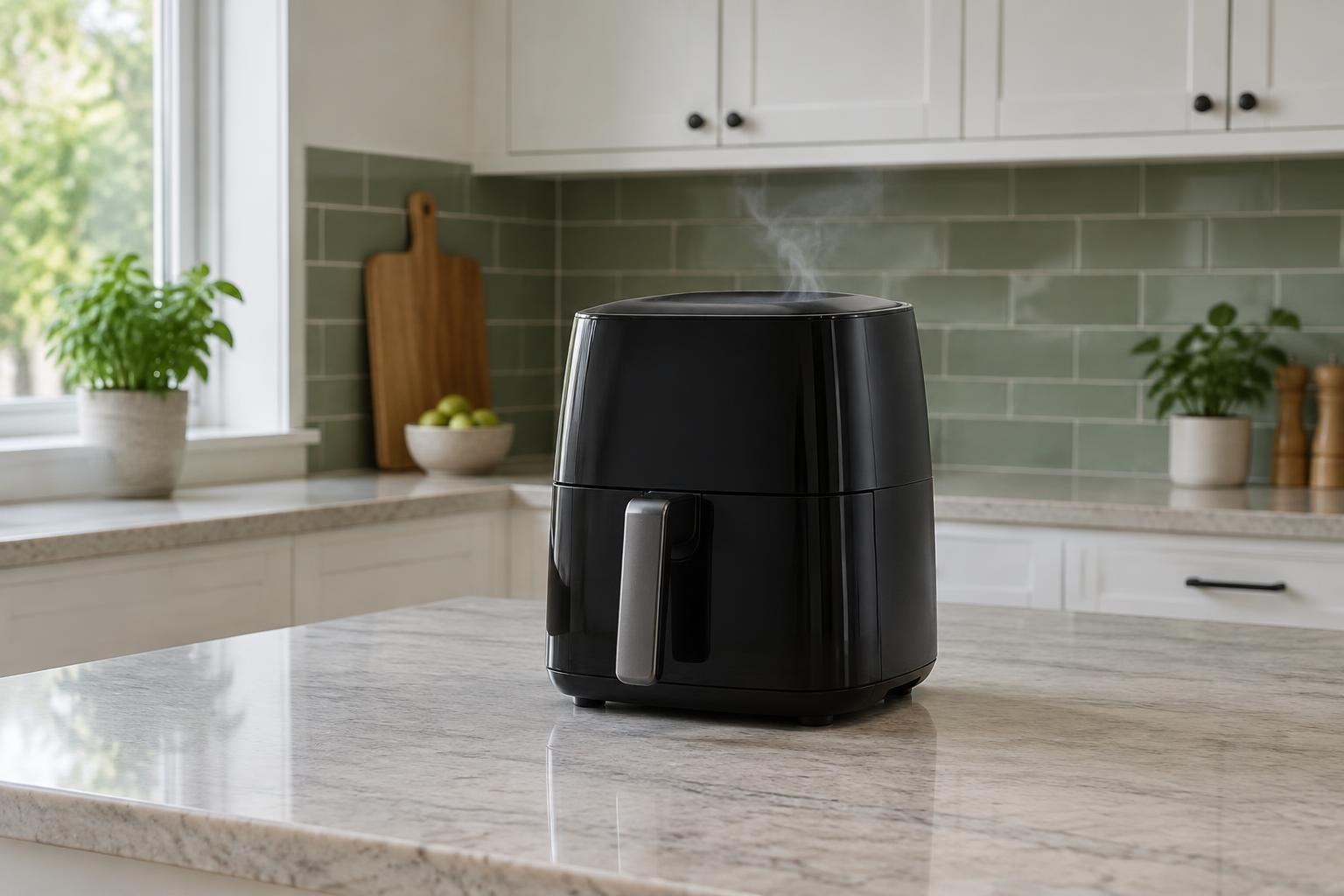
Cooking releases moisture. What we often call steam is a visible mist of tiny water droplets as that moisture meets cooler air. It commonly appears with watery vegetables, frozen food or moist coatings and tends to disperse quickly. Condensation around an outlet can accompany it.
Smoke comes from material overheating or burning, including oil, food residue, paper or electrical components. It can linger as a haze and may smell acrid, burnt or unusually oily. Grease smoke can look pale or white, so colour alone cannot tell you it is harmless; dark smoke is especially concerning.
You cannot reliably rule out a fault by appearance or smell. If the plume is unexpected, persistent or accompanied by an unusual odour, switch off and investigate only after the appliance is safe and cool. Do not continue through dangerous smoke.
Grease buildup and leftover food residue
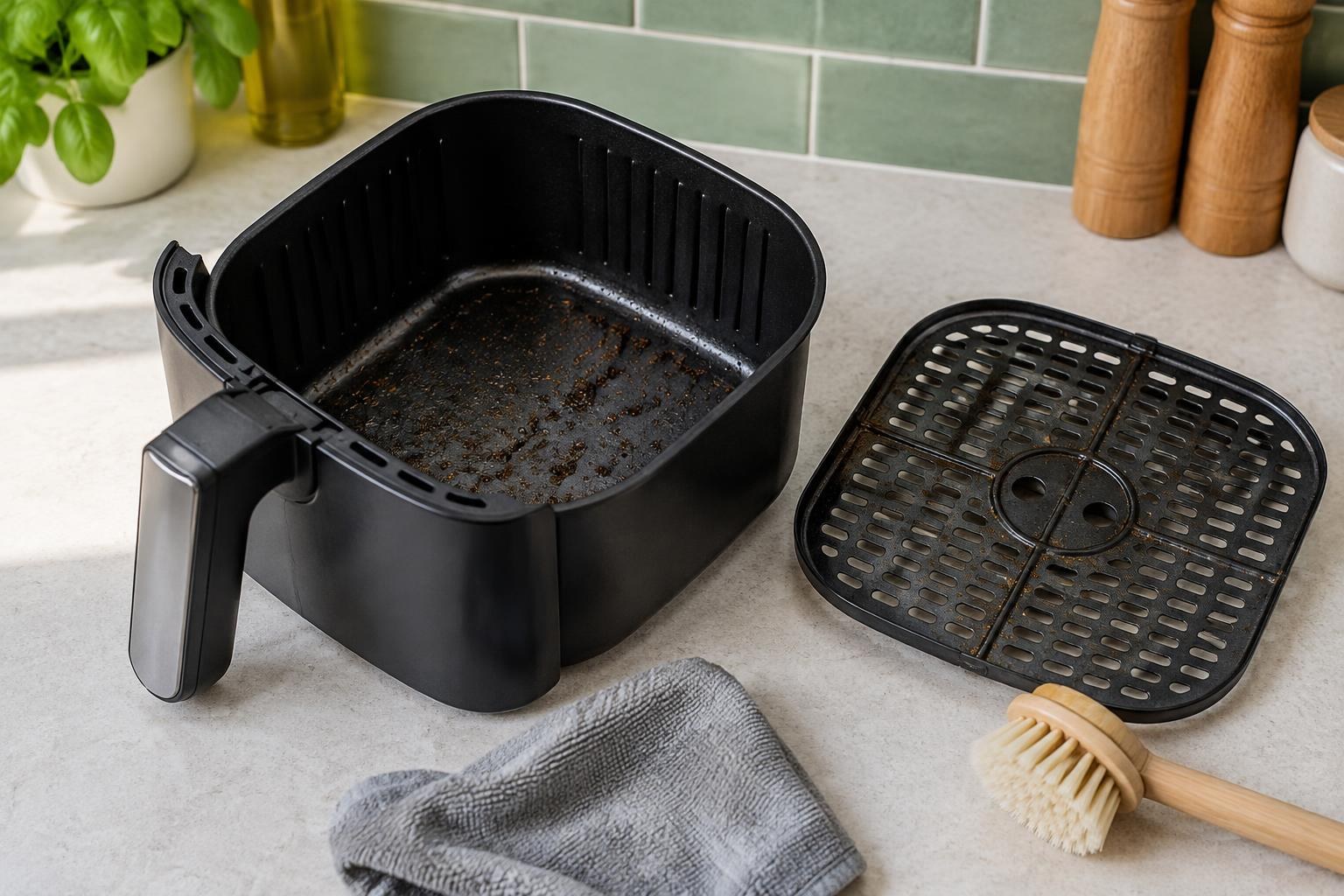
The basket may look fairly clean on top while grease and crumbs remain underneath the crisper plate. On the next cook, that residue heats again and can burn. Sticky sauces and cheese that dripped during a previous meal can do the same.
Once the appliance is disconnected and fully cool, remove the parts the manual allows you to remove and check beneath them. How to Clean an Air Fryer explains routine basket care and careful cleaning around accessible internal surfaces. Never immerse the powered body, cord or plug, and do not dismantle the appliance to reach hidden areas.
Source: Philips, White smoke comes out of my Philips Airfryer
Fatty foods and grease splattering
Bacon, sausages, chicken skin and other fatty foods release fat as they cook. Fat collecting in a hot drawer or splattering onto a heating surface can produce smoke, even when you have added no oil yourself.
Follow your model's guidance for fatty foods, maximum loads and any supplied fat reducer or approved splatter accessory. Do not improvise with bread, water or loose paper in the bottom of the appliance. If smoke develops, stop first; never drain or wipe hot grease from a running appliance. Wait until it is disconnected, no longer smoking and fully cool.
Too much oil and unsuitable cooking sprays
An air fryer does not need a pool of oil to crisp food. Where a recipe calls for oil, a light, even coating is usually more useful than drenching the food. Extra oil can drip, collect and overheat, while oil left from previous cooking can already contain burnt particles.
Choose an oil suited to the intended cooking temperature and follow both its label and the appliance instructions. A high smoke point is not permission to ignore visible smoke. Some aerosol sprays contain additives that certain manufacturers advise against because they can leave residue or affect coatings. Check the manual rather than assuming every spray is suitable, and never spray an aerosol into a hot or operating appliance.
For coated foods, How to Cook Marinated Foods in an Air Fryer explains how to avoid excess dripping marinade. Air Fryer Sticky Sriracha Chicken Wings is a useful recipe example of adding the sauce after the main cooking stage, rather than leaving a sugary coating exposed for the whole cook.
Crumbs, light food and liners near the heating element
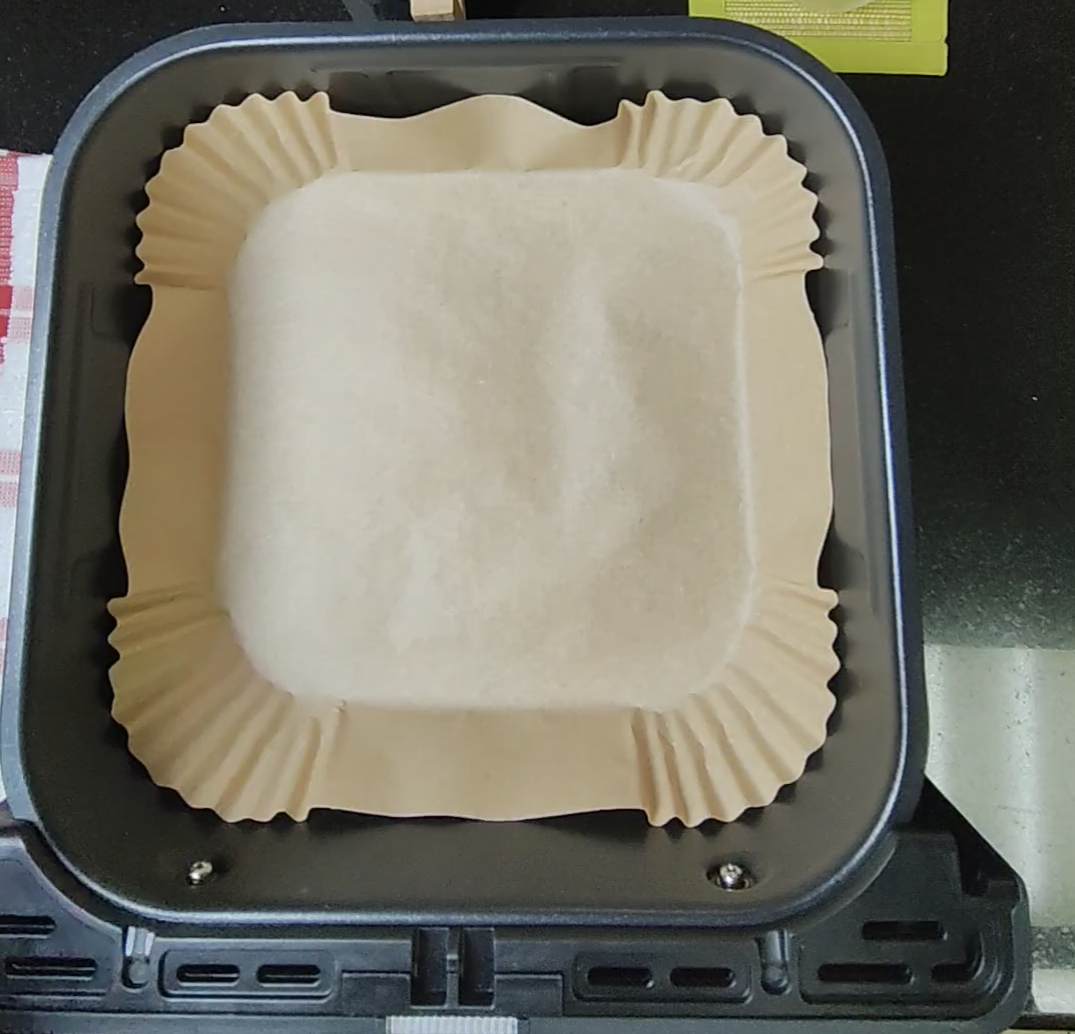
Loose crumbs, thin leaves and poorly attached coatings can be lifted by the fan. If they reach a heating element, they can scorch. Unsecured parchment can lift too, particularly during an empty preheat.
Press breading onto food and use only accessories your manufacturer permits. Can You Use Air Fryer Liners? covers the limitations of paper, foil and reusable liners. Never put a loose liner into an empty running appliance or allow material to touch an element.
Do not reach into a hot appliance to retrieve something. After switching off, disconnecting power and allowing it to cool fully, follow the manual for accessible residue. If something is trapped beyond safe reach, ask the manufacturer for help rather than removing covers or probing around wiring.
Overcrowding and poor airflow
A crowded basket often gives you uneven cooking or trapped moisture rather than smoke on its own. But overfilling can put food too close to heating surfaces, cause coatings to spill and tempt you to keep cooking until exposed edges burn while the centre remains underdone.
Respect the maximum fill level, leave the space recommended for your model and cook in batches when needed. Keep exterior vents clear and follow the manual's clearance requirements. Why Is My Air Fryer Cooking Unevenly? explains the cooking side of airflow without treating every cloud of moisture as a fault.
What if a new air fryer smokes?
Some manufacturers describe a brief first-use odour from new materials or manufacturing residues and give a specific setup procedure. That is not a blanket explanation for smoke, and a new appliance is not automatically safe simply because it has never been used.
Before first use, remove all packaging, protective film and inserts as directed, wash permitted removable parts and follow the exact instructions for your model. Do not invent a high-temperature burn-off routine or run it empty unless the manual tells you to.
Visible smoke, a strong or persistent burning plastic smell, or anything outside the manual's expected first-use behaviour means you should switch off and disconnect power if safe. Contact the retailer or manufacturer rather than running repeated cycles to burn the smell away.
Electrical warning signs: stop using the appliance
A clean basket does not rule out an electrical fault. Stop using the appliance and disconnect power if safe when you notice any of these signs:
- A burning electrical or plastic smell, persistent smoke or smoke with no clear cooking cause.
- Sparks, unusual buzzing or crackling, repeated breaker trips, or unexpected loss of power.
- Scorch marks, melting, a damaged cable or plug, or an unusually hot plug or socket.
- Controls that behave unpredictably or an appliance that does not stop heating when it should.
Source: Electrical Safety First, Air fryers usage and safety
Simple habits that help prevent smoking
- Clean removable cooking parts after use once they have cooled, checking beneath the crisper plate for grease and crumbs.
- Use soft tools and manufacturer-approved cleaning methods. Dry washed parts fully before reassembly; do not heat soapy water in the appliance as a cleaning shortcut.
- Check accessible internal surfaces regularly and clean heating elements only as your manual directs, with power disconnected and the appliance fully cool.
- Use modest oil quantities, drain excess marinade where appropriate and keep loose coatings away from heating elements.
- Keep vents clear, respect fill limits and use only permitted accessories.
- Stay nearby while cooking, check food before it burns and never disable a smoke alarm to finish a meal.
Source: Electrical Safety First, How to safely spring clean your home gadgets
When to contact the manufacturer
Contact the manufacturer or retailer if smoke returns after appropriate cleaning, if the cause is unclear, or if there is any electrical warning sign. Keep the appliance out of use until you have been advised that it is safe. Do not keep switching it on to reproduce a dangerous problem or attempt your own electrical repair.
Once it is safe to do so, note the model, what you were cooking and what you observed. Check for product recalls and follow any stop-use notice. A suspect socket or household wiring needs a qualified electrician, not another trial cook.
Ordinary steam is part of cooking moist food. Persistent smoke is not something to cook through: stop, make the situation safe and deal with the cause before the next meal.