Air Fryer Guides
Why Is My Air Fryer Cooking Unevenly? 7 Common Causes and Easy Fixes
Ever taken food out of an air fryer and noticed that some pieces are beautifully golden while others still need a little longer?
Uneven cooking can happen for several reasons, from how food is arranged in the basket to differences in size, moisture and cooking temperature.
The good news is that many of these problems are easy to avoid once you understand what affects the way hot air moves around your food.
Here are seven things worth checking.
By Esther LackiePublished
1. The Basket Is Too Full
Air fryers cook by circulating hot air around food.
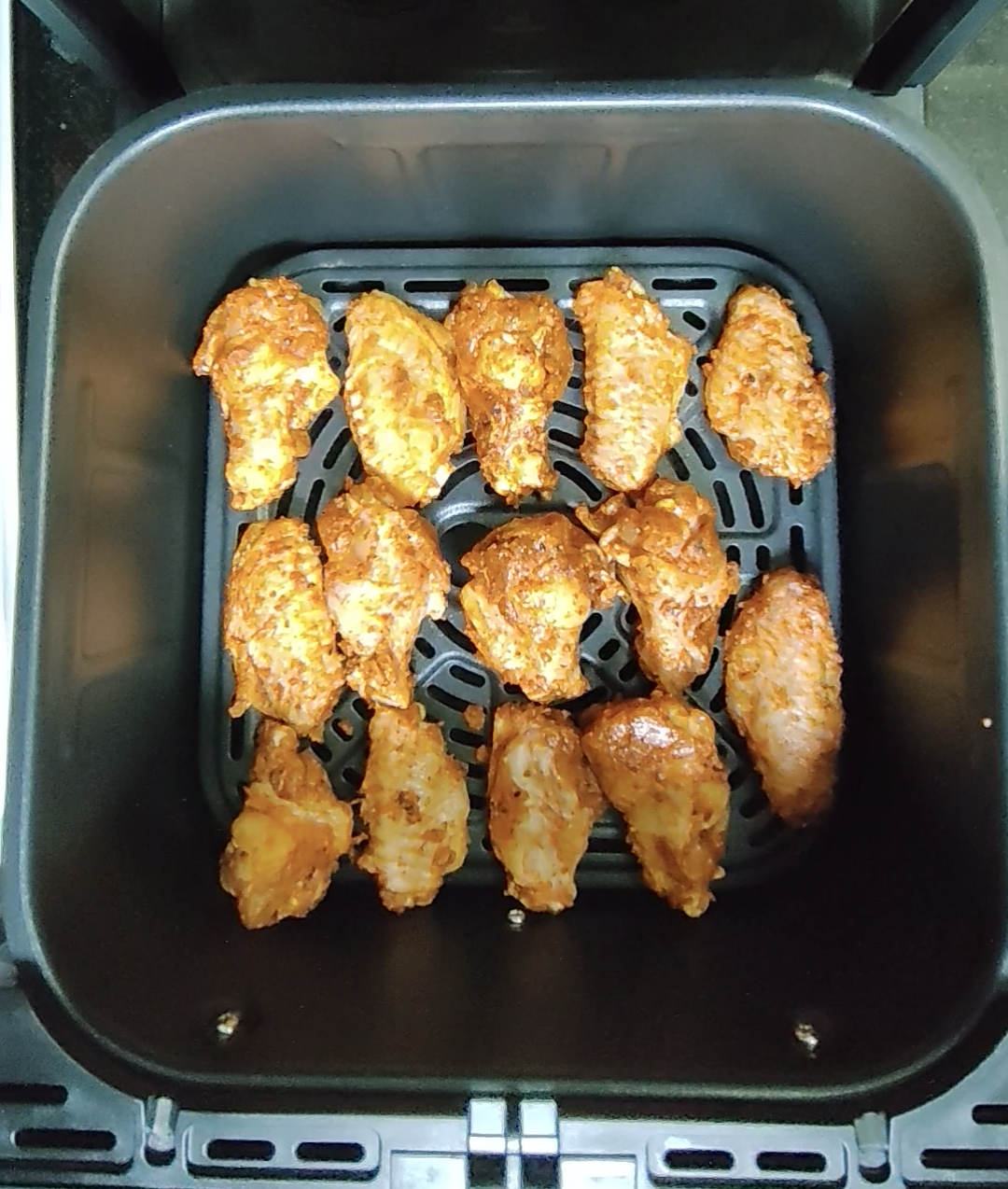
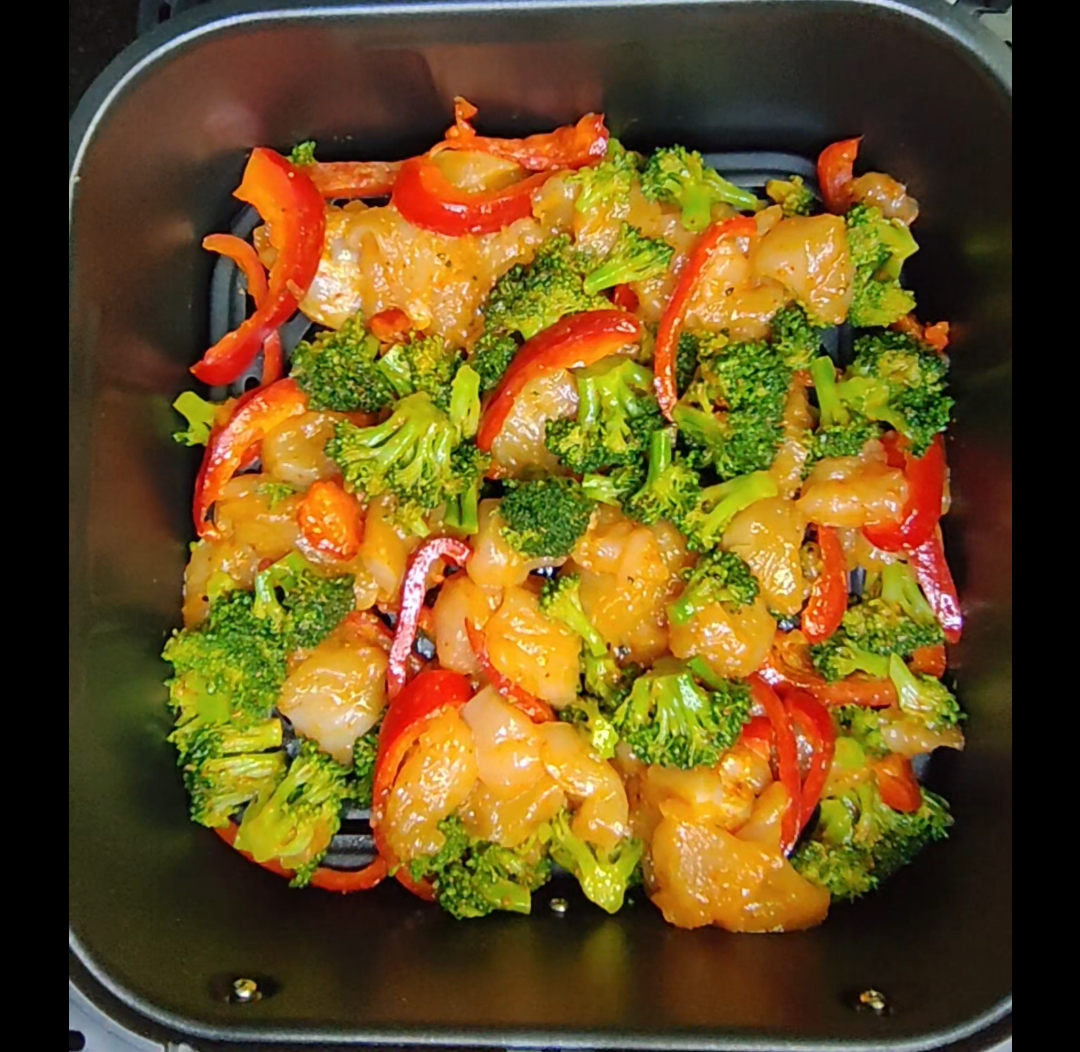
When pieces are packed tightly together, some surfaces receive less circulating hot air. That can leave certain areas softer or paler than others.
What to do:
- Avoid tightly packing food into the basket.
- Spread pieces out where practical.
- Cook in batches when necessary.
- Follow your air fryer's guidance on basket capacity.
Some foods can be cooked in layers, but results depend on the appliance and the food. Not every recipe needs a perfect single layer.
2. The Pieces Are Different Sizes
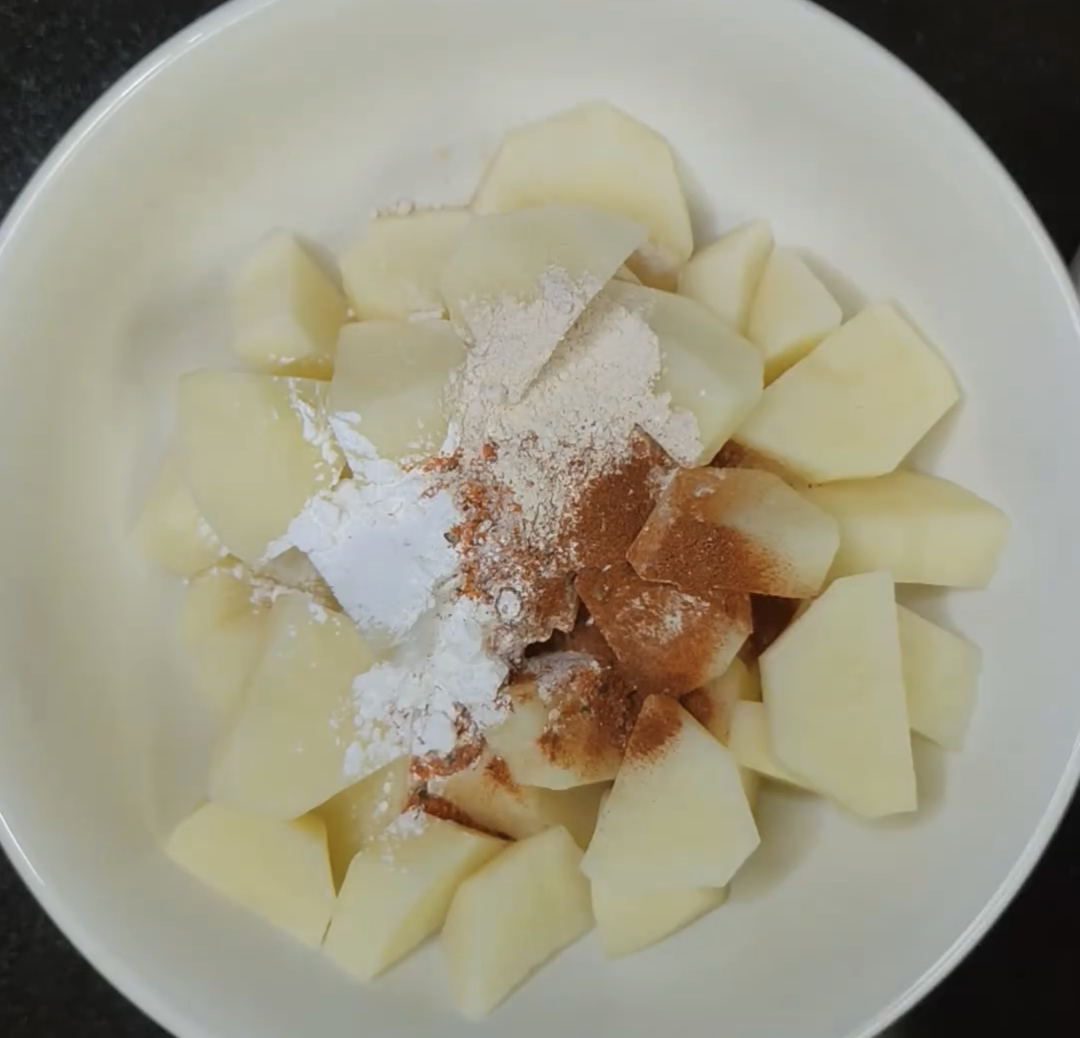
A small potato wedge and a much larger one may not finish cooking at the same time. The same applies to vegetables, chicken pieces and other foods.
What to do: cut ingredients into reasonably similar sizes when you want them to finish together. If you're cooking different sizes intentionally, allow for their different cooking times.
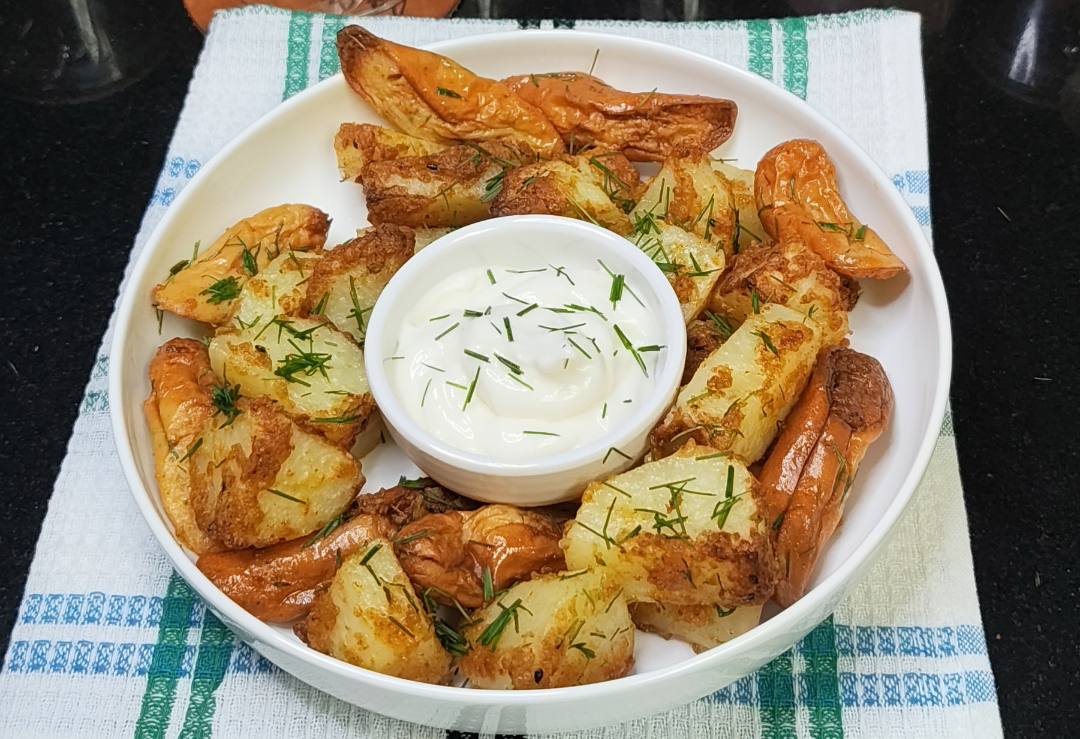
In my Air Fryer Crispy Potatoes and Chicken Sausages, the potatoes are cut into similar chunks before seasoning, as in the photograph below.
3. There Is Too Much Surface Moisture
Excess water on the surface of food can delay browning and make crisp results harder to achieve. It's particularly noticeable with some vegetables and potatoes.
What to do:
- Drain washed ingredients properly.
- Pat food dry where appropriate.
- Avoid adding unnecessary liquid to foods you want to brown or crisp.
Remember that not every dish is meant to be crispy. Moist marinades and saucy foods may produce a different finish, and that is not necessarily a cooking problem. For more on texture, see why is my air fryer food not crispy.
4. The Temperature Doesn't Suit the Food
A temperature that is too high can brown the outside quickly while the centre needs more time. A temperature that is too low may cook food without producing the browning you expected.
What to do: choose a temperature suitable for the particular ingredient, its size and the result you want. If the outside is browning too quickly, a lower temperature and a little more cooking time may help.
One temperature won't suit every food, so it's worth adjusting for each dish rather than using the same setting every time.
5. Different Foods Need Different Cooking Times
Cooking two ingredients together can be convenient, but they may not be ready at the same moment. Small vegetables and thick pieces of meat, for example, may need different cooking times.
What to do:
- Consider the cooking time of each ingredient.
- Add quicker-cooking ingredients later when appropriate.
- Use separate compartments if your appliance has them and the recipe benefits from it.
- Check each food independently for doneness.
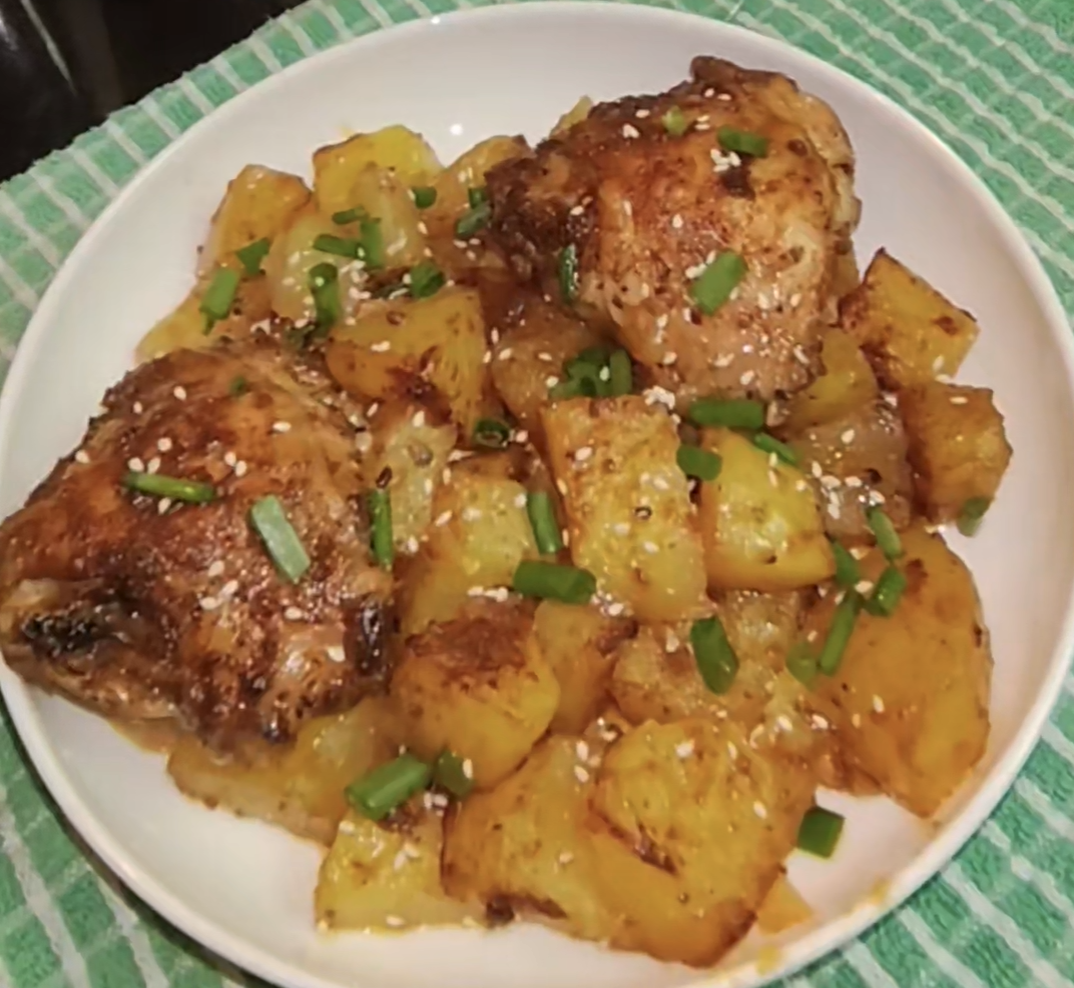
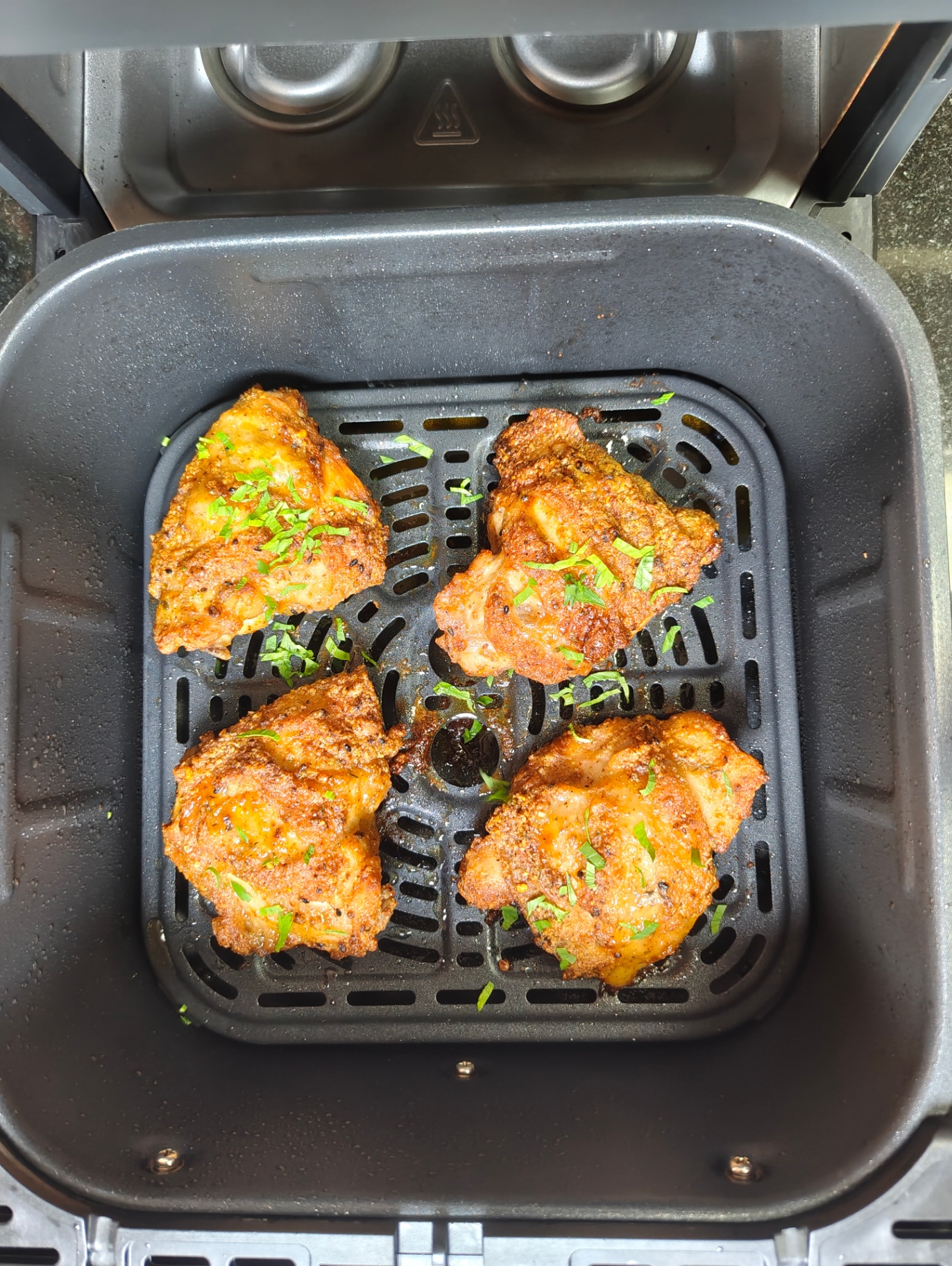
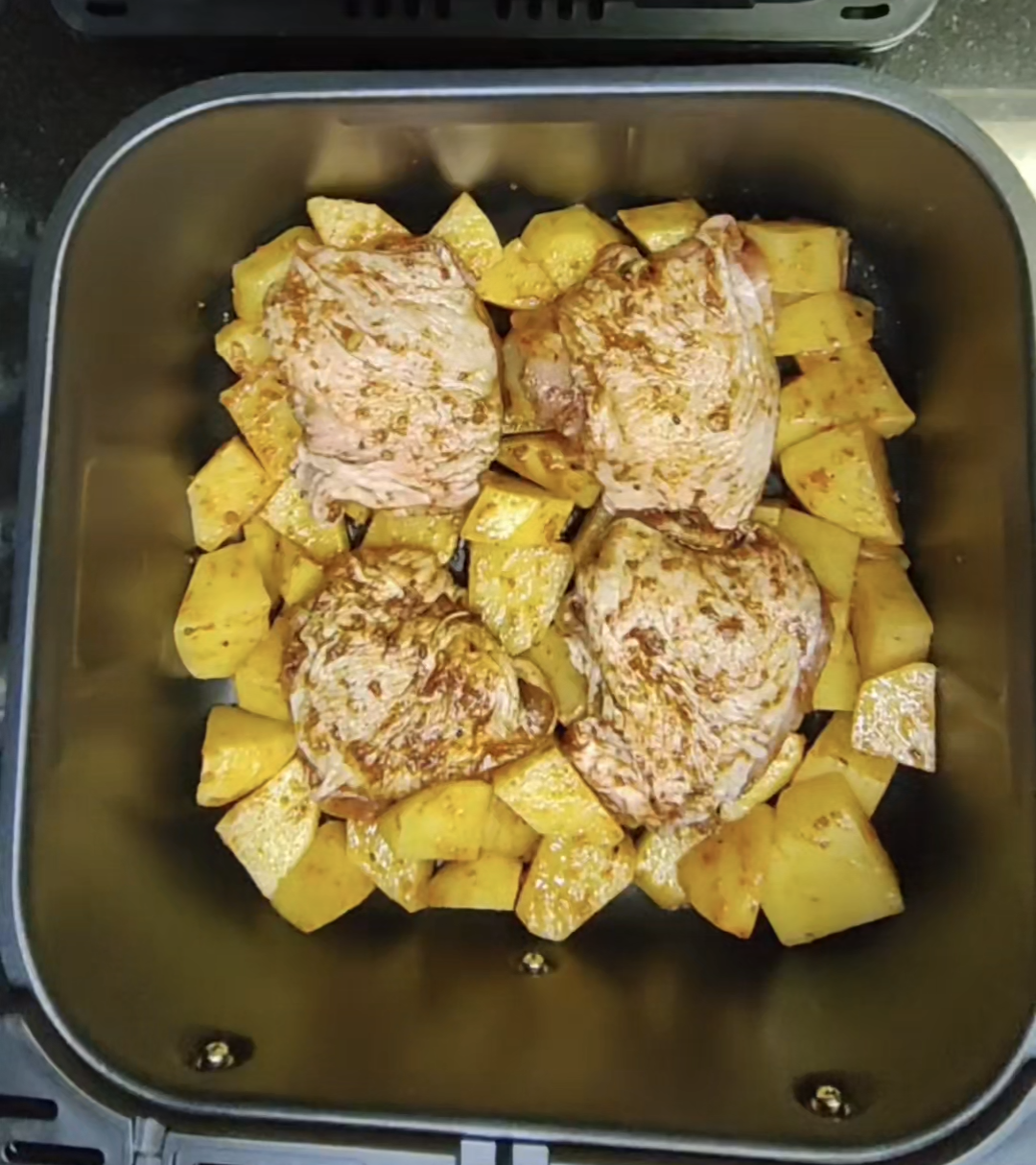
My guide on whether you can cook two different foods together in an air fryer goes into this in more detail. In my Easy Air Fryer Chicken and Potatoes, the chicken thighs and potato pieces go into the basket together, arranged with space around them.
6. Airflow and Basket Design Vary
Not all air fryers move hot air around food in exactly the same way. Basket shape, heating elements, rack placement, fan design and compartment layout can all affect how evenly food cooks.
What to do:
- Follow your appliance's instructions.
- Keep required air vents unobstructed.
- Use trays, racks and accessories only when suitable for the appliance.
- Avoid blocking airflow with oversized liners or cookware.
Some appliances have features designed to improve heat distribution, but no appliance can guarantee perfectly even results with every food. If you use liners or dishes, my guides on air fryer liners and what containers you can put in an air fryer explain what to look out for.
7. The Food May Need Repositioning
Depending on the appliance and the dish, food may benefit from being shaken, turned or rearranged during cooking.
That isn't a universal requirement, though. Some air fryer designs and recipes produce excellent results without flipping.
What to do: check the appliance instructions and the recipe, and shake, turn or reposition food when it suits the dish and appliance.
Quick Troubleshooting Table
| Problem | Possible cause | Try |
|---|---|---|
| Some pieces are pale while others are golden | Overcrowding or uneven piece sizes | Allow more space and cut similar sized pieces |
| Outside browns before the centre is cooked | Temperature too high or pieces too thick | Reduce the temperature as appropriate and allow sufficient cooking time |
| Vegetables seem wet rather than roasted | Excess moisture or overcrowding | Drain and dry appropriately, and avoid packing the basket too tightly |
| Two foods finish at different times | Different cooking requirements | Stagger cooking or use separate compartments where appropriate |
| One area browns faster than another | Airflow or appliance design | Check positioning, accessories and appliance instructions; reposition food if needed |
- Some pieces are pale while others are golden
- Possible cause: Overcrowding or uneven piece sizes
- Try: Allow more space and cut similar sized pieces
- Outside browns before the centre is cooked
- Possible cause: Temperature too high or pieces too thick
- Try: Reduce the temperature as appropriate and allow sufficient cooking time
- Vegetables seem wet rather than roasted
- Possible cause: Excess moisture or overcrowding
- Try: Drain and dry appropriately, and avoid packing the basket too tightly
- Two foods finish at different times
- Possible cause: Different cooking requirements
- Try: Stagger cooking or use separate compartments where appropriate
- One area browns faster than another
- Possible cause: Airflow or appliance design
- Try: Check positioning, accessories and appliance instructions; reposition food if needed
A Note on Food Safety
Even browning doesn't always mean food is safely cooked through.
That matters particularly for poultry and other foods that need thorough cooking. Colour alone can't tell you whether food is safe, so follow reliable food safety guidance and suitable cooking instructions, and use a food thermometer where appropriate.
Frequently Asked Questions
Do I always need to shake my air fryer basket?
No. It depends on the food and the appliance. Some foods benefit from shaking or repositioning, while others cook well without it.
Does an air fryer need preheating for even cooking?
Not always. Preheating requirements vary by appliance and recipe. Follow the manufacturer's guidance where applicable rather than assuming every air fryer needs preheating.
Why are my air fryer potatoes cooking unevenly?
Uneven sizes, excess moisture, overcrowding and temperature selection can all contribute. Try cutting the potatoes more evenly and giving them sufficient space.
Can I cook different foods together in an air fryer?
Yes, when their cooking requirements are compatible and you manage their different cooking times. Some foods are better added later or cooked in separate compartments. See can you cook two different foods together in an air fryer for more.
Does uneven browning mean my air fryer is faulty?
Not necessarily. Food arrangement, ingredient size and cooking method can affect browning. If the appliance consistently heats abnormally or shows signs of malfunction, follow the manufacturer's troubleshooting and safety guidance.
Final Thoughts
Uneven cooking doesn't always mean something is wrong with your air fryer.
Often, small adjustments to food size, basket space, moisture and cooking temperature can make a noticeable difference.
Understanding how your particular air fryer works is one of the best ways to get more consistent results.