Air Fryer GuidesIngredient Guides
Best Oil for Air Fryers: A Complete Guide to Cooking Oils, Smoke Points and Butter
Choosing the right oil for your air fryer can make a difference to how your food cooks, browns and tastes. But with so many options available, from olive and sunflower oil to avocado oil, coconut oil and butter, it's not always obvious which one to reach for.
Do you really need a special oil for air frying? Can you use extra virgin olive oil? And what happens if you brush melted butter over your food before cooking?
The good news is that you don't need a cupboard full of expensive oils to get good results. Understanding a few basics about smoke points, flavour and how different fats behave when heated will help you choose the right one for everyday cooking.
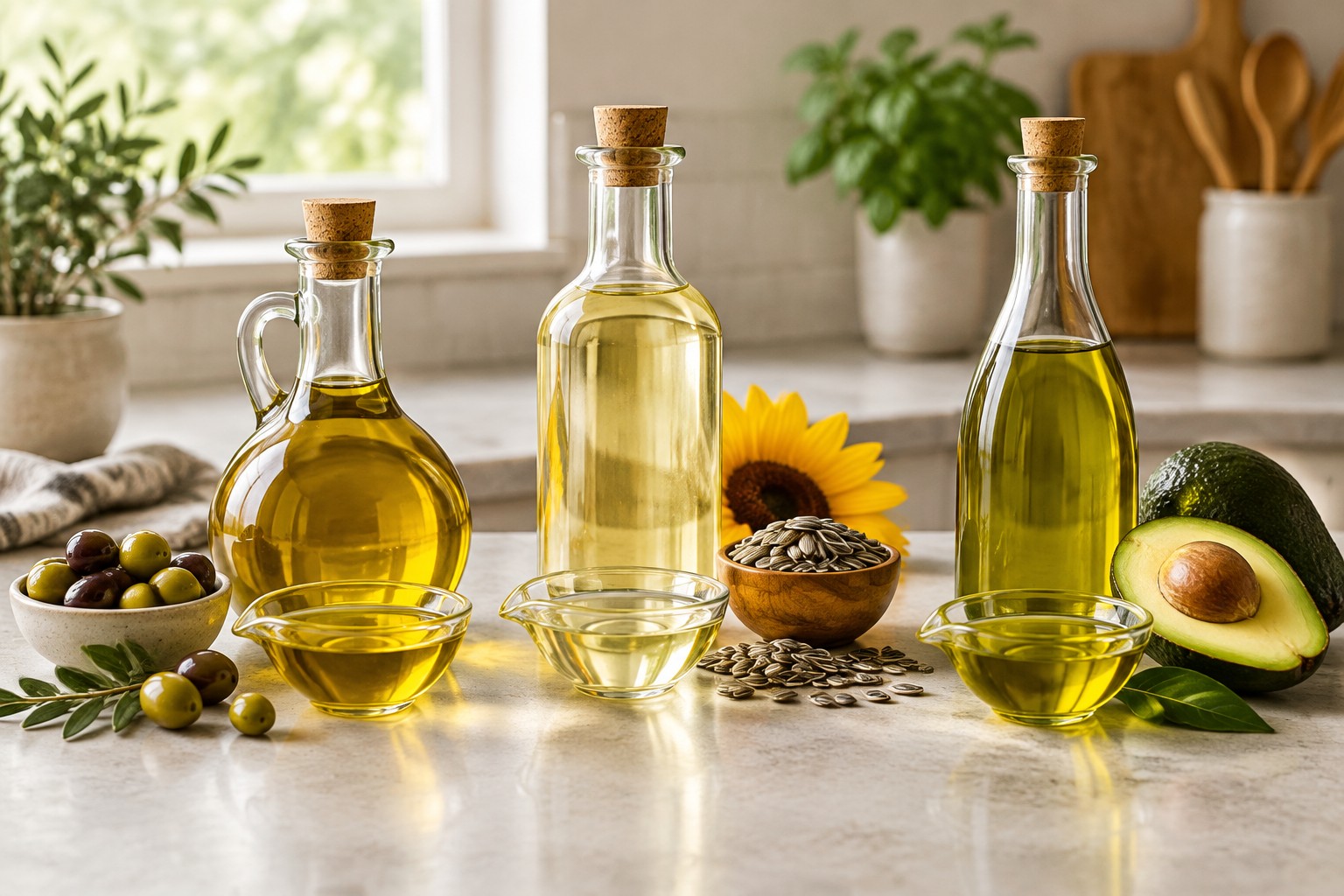
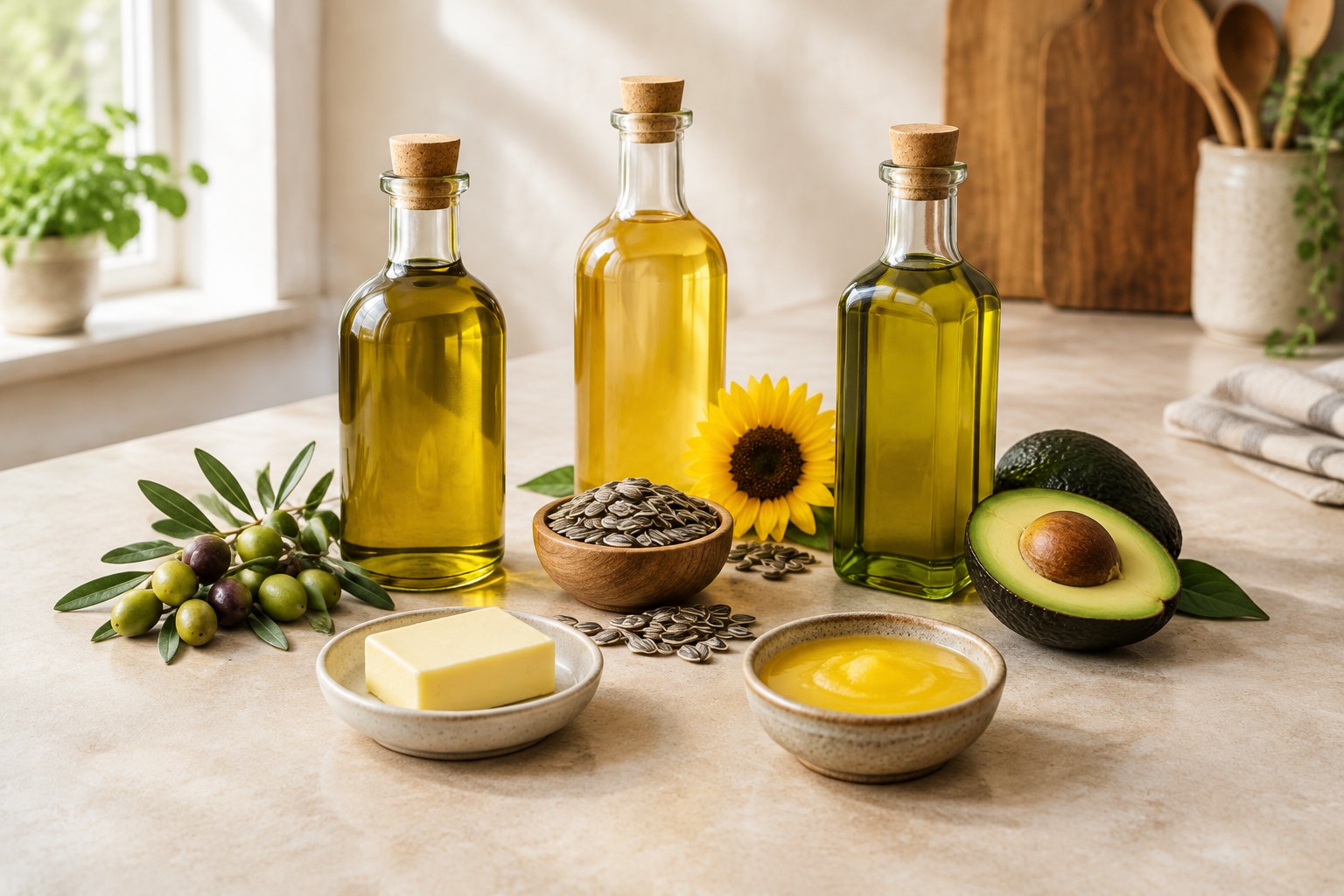
The images in this guide are AI-generated editorial illustrations.
By Esther LackiePublished
What is an oil's smoke point?
An oil's smoke point is the approximate temperature at which it begins producing visible smoke as it heats.
When oil becomes excessively hot, it can start breaking down, affecting its flavour and quality.
However, smoke point is not the only measure of how well an oil performs during cooking. Its fatty acid composition, antioxidants, degree of refinement and exposure to heat over time also matter.
For air frying, the practical lesson is simple: choose an oil that suits the cooking temperature, the food and the flavour you want.
Comparing common cooking oils
| Oil | Approximate smoke point | Suitable uses |
|---|---|---|
| Refined avocado oil | 250–270°C | Higher temperature cooking, chicken, potatoes and vegetables |
| Refined sunflower oil | 225–255°C | Everyday air frying, chicken, vegetables and potatoes |
| Refined peanut oil | 225–230°C | Potatoes, chicken and savoury snacks |
| Refined olive oil | 200–240°C | Fish, chicken and vegetables |
| Refined canola oil | 200–240°C | Everyday air frying and coated foods |
| Extra virgin olive oil | 175–210°C | Moderate temperature cooking, vegetables, fish and marinades |
| Refined coconut oil | 200–230°C | Selected baked foods and vegetables |
| Regular butter | 150–175°C | Baking, lower temperature cooking and finishing |
| Ghee | 230–250°C | Higher temperature cooking, vegetables and potatoes |
- Refined avocado oil
- Approximate smoke point: 250–270°C
- Suitable uses: Higher temperature cooking, chicken, potatoes and vegetables
- Refined sunflower oil
- Approximate smoke point: 225–255°C
- Suitable uses: Everyday air frying, chicken, vegetables and potatoes
- Refined peanut oil
- Approximate smoke point: 225–230°C
- Suitable uses: Potatoes, chicken and savoury snacks
- Refined olive oil
- Approximate smoke point: 200–240°C
- Suitable uses: Fish, chicken and vegetables
- Refined canola oil
- Approximate smoke point: 200–240°C
- Suitable uses: Everyday air frying and coated foods
- Extra virgin olive oil
- Approximate smoke point: 175–210°C
- Suitable uses: Moderate temperature cooking, vegetables, fish and marinades
- Refined coconut oil
- Approximate smoke point: 200–230°C
- Suitable uses: Selected baked foods and vegetables
- Regular butter
- Approximate smoke point: 150–175°C
- Suitable uses: Baking, lower temperature cooking and finishing
- Ghee
- Approximate smoke point: 230–250°C
- Suitable uses: Higher temperature cooking, vegetables and potatoes
These figures are approximate reference ranges, not guaranteed temperature limits. Smoke points vary according to refining, quality, freshness and the specific product. The temperature selected on an air fryer is not necessarily the exact temperature experienced by oil on the surface of food.
Which oil is best for different air fryer foods?
Potatoes and chips
Refined sunflower, canola and avocado oil are practical choices for potatoes. Their relatively neutral flavours allow seasonings to come through.
For homemade chips or wedges, a small amount of oil distributed evenly over the potatoes is usually more useful than pouring oil into the basket.
Too much oil can leave potatoes greasy rather than helping them become crisp.
Chicken
Sunflower oil, refined olive oil and avocado oil all work well with chicken.
Skin on chicken already contains fat, so additional oil may not always be necessary.
For skinless chicken, a little oil can help distribute seasonings and improve surface browning.
Fish and seafood
Olive oil is a good option for many fish dishes, particularly when cooking at moderate temperatures. Its flavour pairs well with lemon, garlic and herbs.
For a more neutral taste, canola or refined sunflower oil can also work.
Vegetables
Olive oil is a versatile choice for peppers, courgettes, broccoli and many other vegetables.
Avocado and sunflower oil are alternatives, particularly for hotter cooking.
The amount needed depends on the vegetable, its moisture content and how it has been prepared.
Puff pastry and baked goods
Puff pastry already contains fat within its layers, so additional cooking oil is often unnecessary.
For cakes and other baked goods, follow the recipe's specified fat rather than automatically substituting another oil.
Can you use extra virgin olive oil in an air fryer?
Yes.
Extra virgin olive oil is sometimes described as unsuitable for air frying because of its smoke point. That advice is too simplistic.
Good quality extra virgin olive oil contains monounsaturated fats and natural antioxidant compounds that contribute to its cooking stability.
The UC Davis Olive Center explains that olive oil can perform well during cooking and that its smoke point varies considerably depending on grade, quality and freshness.
For everyday air frying, consider the temperature and the particular olive oil you're using.
Refined olive oil may be convenient for hotter cooking, while extra virgin olive oil is useful when its distinctive flavour is welcome.
Also remember that "light" olive oil refers to its milder flavour and colour after refining. It does not mean fewer calories.
Regular sunflower oil versus high oleic sunflower oil
Not all sunflower oils have the same fatty acid composition.
Conventional sunflower oil is generally richer in polyunsaturated linoleic acid.
High oleic sunflower oil contains a higher proportion of monounsaturated oleic acid.
This difference matters because oils rich in oleic acid generally demonstrate greater resistance to oxidation during prolonged heating than conventional sunflower oil.
Research comparing conventional and high oleic sunflower oils has demonstrated improved oxidative stability in high oleic varieties.
However, both can be useful for everyday cooking when used appropriately.
High oleic sunflower oil may be a particularly practical choice for hotter cooking, although availability and price vary.
Check the product label rather than assuming that every bottle of sunflower oil has the same composition.
Source: Petersen and colleagues — International Journal of Food Sciences and Nutrition, Assessment of the oxidative stability of conventional and high-oleic sunflower oil by means of solid-phase microextraction-gas chromatography; Journal of the American Oil Chemists’ Society, Oxidative Stability of Conventional and High-Oleic Vegetable Oils with Added Antioxidants
Can you use butter in an air fryer?
Yes, but butter behaves differently from cooking oil.
Regular butter contains fat, water and milk solids.
Those milk solids can brown and eventually burn when exposed to high temperatures.
Butter can be useful in baking and as a finishing ingredient, but it isn't always the best choice for coating food before high temperature air frying.
What about ghee?
Ghee is clarified butter with most of its water and milk solids removed.
It has a higher smoke point than regular butter, making it more suitable for hotter cooking.
It also adds a rich, buttery flavour.
Does mixing butter with oil stop it burning?
Not necessarily.
Adding oil doesn't remove the milk solids from butter. Those solids can still brown or burn even when butter is mixed with another fat.
For garlic butter and other flavoured butters, adding them toward the end of cooking or after cooking may help preserve their flavour and prevent delicate ingredients from scorching.
How much oil should you use in an air fryer?
Air fryers circulate hot air around food, so they generally require much less oil than deep frying.
Some foods need only a light coating.
Others, including foods that already contain fat, may not need additional oil at all.
A useful approach is to start with a small amount, distribute it evenly and adjust according to the food and recipe.
Avoid pouring oil into the bottom of the basket as though using a deep fryer.
Are oil sprays safe for air fryers?
Oil sprays can make it easier to apply a thin, even coating.
However, some aerosol nonstick sprays contain additional ingredients that may affect certain basket coatings over time.
Always check the care instructions for your particular air fryer.
A refillable, food safe oil mister can be useful, provided it is designed for cooking oil and cleaned according to its instructions.
Where possible, apply oil directly to the food rather than spraying unnecessary amounts into the appliance.
Does more oil make air fryer food crispier?
Not automatically.
A little oil can improve surface browning and texture, but adding more does not guarantee crispier food.
Excess oil may collect beneath food, contribute to smoke or leave the surface feeling greasy.
For many foods, moisture, surface preparation, airflow and cooking temperature matter just as much as the amount of oil.
Why does oil sometimes smoke in an air fryer?
Smoke can occur when oil or fat becomes too hot, when grease accumulates around the heating area, or when food releases substantial amounts of fat during cooking.
It can also result from residue left from previous meals.
Choosing a suitable oil helps, but cleaning and proper food preparation are equally important.
For more detailed troubleshooting, read our existing guide, "Why Your Air Fryer Smokes and What to Do".
Which cooking oil is the healthiest?
There isn't one perfect oil for every cooking situation.
For everyday cooking, oils containing more unsaturated fats, such as olive, canola and sunflower oil, are generally preferable to relying heavily on butter or other fats rich in saturated fat.
The American Heart Association recommends replacing saturated fats with unsaturated fats where practical.
Avocado oil is another useful option, although its price may make it less practical for everyday cooking.
Coconut oil contains relatively high amounts of saturated fat, so its higher smoke point in refined forms does not automatically make it a better everyday nutritional choice.
The overall balance of your diet matters more than choosing the most expensive oil.
How should cooking oils be stored?
Heat, light and oxygen can gradually affect oil quality.
Keep cooking oils tightly closed in a cool, dark cupboard, away from direct sunlight and heat sources.
Avoid using oil that smells rancid or has developed an unusual unpleasant flavour.
Buying smaller bottles can help prevent oils sitting unused for too long.
Frequently asked questions
Can I use vegetable oil in an air fryer?
Yes. Most refined vegetable oils are suitable for everyday air frying when used at appropriate temperatures.
Can I use coconut oil?
Yes, although refined and virgin coconut oils differ in flavour and heat tolerance. Coconut oil also contains more saturated fat than many common liquid vegetable oils.
Can I put oil directly into the air fryer basket?
An air fryer is not designed to hold a pool of cooking oil like a deep fryer. Apply the appropriate amount to the food instead.
Can I cook without oil?
Yes. Many foods can be air fried without added oil, particularly those that already contain fat.
Is avocado oil better than sunflower oil?
Not necessarily.
Refined avocado oil offers a high smoke point, but sunflower oil is often more affordable and works well for many everyday dishes.
The type of sunflower oil also matters.
Can I reuse oil from my air fryer?
For routine home air frying, it's better to use fresh oil rather than collect and reuse drippings from the basket.
Those drippings may contain food residue, moisture and degraded fats.
Is olive oil suitable for high temperature air frying?
Many olive oils can be used for cooking at relatively high temperatures, but their characteristics vary.
Choose a suitable product, avoid prolonged overheating and pay attention to any smoking.
Can I use butter instead of oil for air fryer potatoes?
Butter can add flavour, but regular butter's milk solids may burn at high temperatures.
Ghee is more suitable for hotter cooking. Alternatively, finish cooked potatoes with a little butter for flavour.
Final thoughts
Choosing an oil for your air fryer doesn't need to be complicated.
For most everyday meals, a good quality refined sunflower, canola or olive oil will do the job.
Avocado oil is another option for higher temperature cooking, while extra virgin olive oil can work beautifully when used appropriately.
Butter and ghee have their own places in the kitchen, but they're not interchangeable in every recipe.
The best choice comes down to what you're cooking, the temperature you're using and the flavour you're hoping to achieve.
Sources and Further Reading
- UC Davis Olive Center — Olive Oil Myths and Facts
- Petersen and colleagues — International Journal of Food Sciences and Nutrition — Assessment of the oxidative stability of conventional and high-oleic sunflower oil by means of solid-phase microextraction-gas chromatography
- Journal of the American Oil Chemists’ Society — Oxidative Stability of Conventional and High-Oleic Vegetable Oils with Added Antioxidants
- American Heart Association — Healthy Cooking Oils