Ingredient Guides
Different Types of Potatoes and Their Best Uses
Choosing the right potato can make a noticeable difference to your dish. Some cook into fluffy centres with crisp edges, while others stay firm or become wonderfully creamy.
Whether you're making mash, a potato salad or a batch of air fryer chips, it helps to know what each type does best. Here's a practical guide to familiar varieties, the textures to look for and how to choose potatoes for everyday cooking.
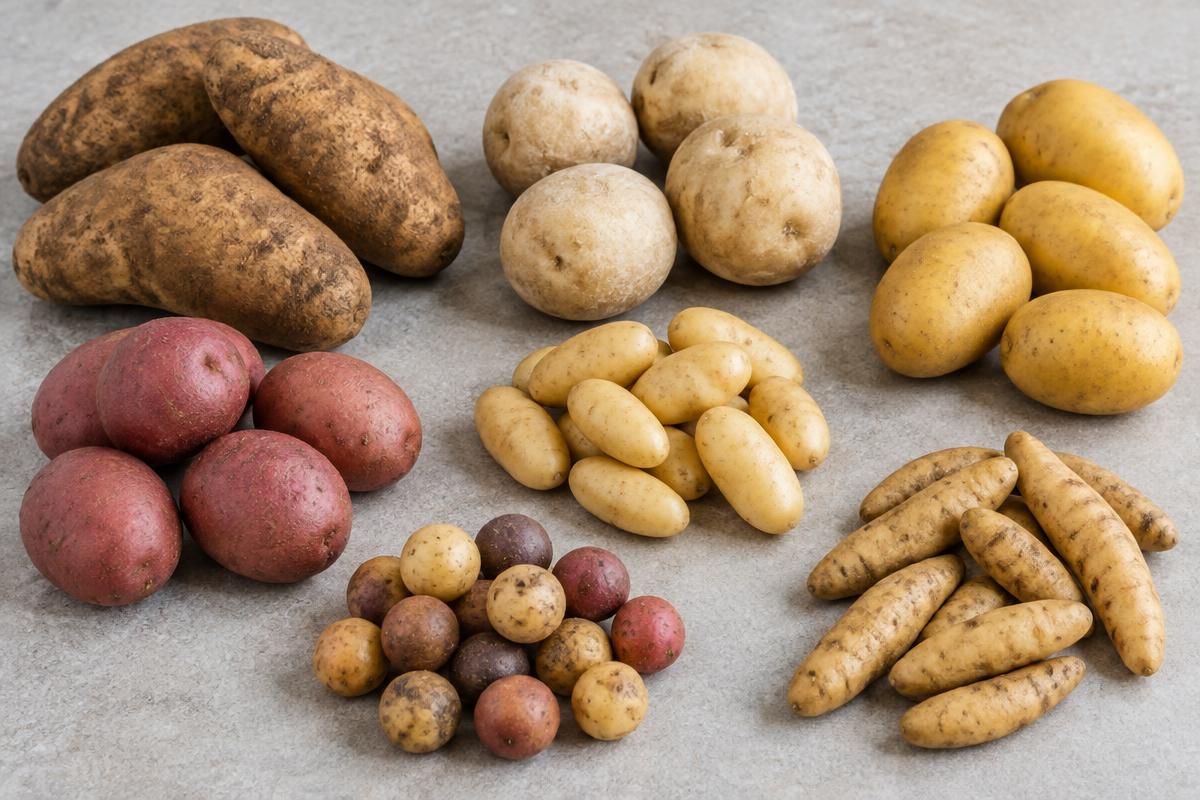
The images in this guide are AI-generated editorial illustrations.
By Esther LackiePublished
Understanding Potato Textures
Potatoes fall into three broad groups: floury, waxy and all-purpose. These are useful starting points rather than fixed rules. Variety, growing conditions and maturity can all affect how a potato cooks.
Floury or starchy potatoes
Floury potatoes generally have more starch and less moisture. Their cooked flesh breaks apart easily and becomes fluffy, making them excellent for mash, baked potatoes, chips and crisp roast potatoes. Russet, Maris Piper and King Edward are familiar examples.
Waxy potatoes
Waxy potatoes generally contain less starch and more moisture. They hold their shape well, which is useful for boiling, salads and dishes where you want distinct pieces rather than a fluffy crumble. Charlotte, many red-skinned varieties and many new potatoes sit in this group.
All-purpose potatoes
All-purpose potatoes offer a balance between fluffy and firm. Yukon Gold and other suitable yellow-fleshed varieties work across several methods, giving you tenderness without always falling apart.
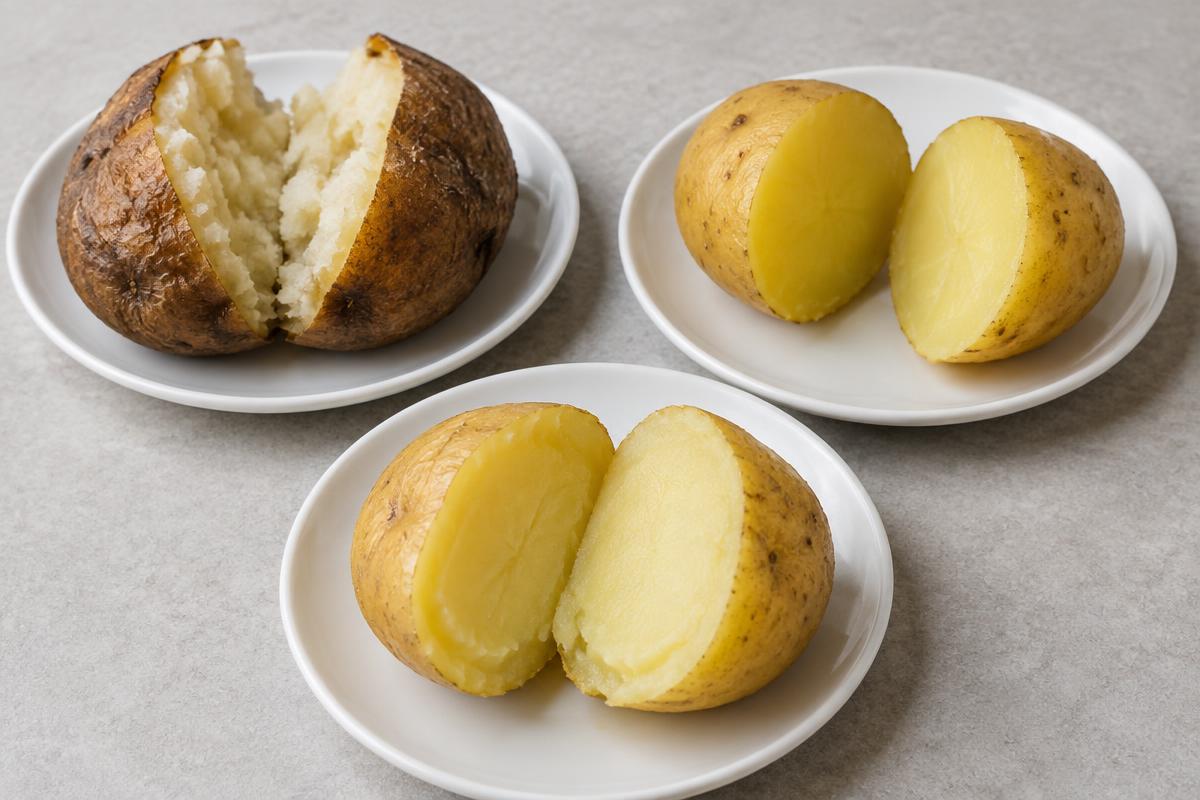
Different Types of Potatoes
The names on the bag can tell you more than skin colour alone. If a variety isn't available where you shop, look for a potato described as floury, waxy or all-purpose to suit your dish.
Russet potatoes
Russets are high-starch potatoes with brown, often rough skins and a fluffy cooked interior. They suit chips, wedges, baked potatoes and mash. That soft centre makes a lovely contrast with a crisp outside.
Maris Piper
Maris Piper is a floury variety widely used in British cooking. It's a useful choice for chips, roasting and mash, especially when you want a fluffy centre and a crisp finish.
King Edward
King Edward potatoes have a floury interior that works well for roast potatoes, mash and baked potatoes. Handle cooked pieces gently if you want them to stay intact, as their fluffy flesh can break up.
Yukon Gold
Yukon Gold potatoes have yellow flesh, a naturally buttery flavour and a versatile texture. They're a good choice for creamy mash, roasting, Hasselback potatoes and potato gratin. Their flavour doesn't mean butter has been added.
Charlotte
Charlotte potatoes are firm and waxy, holding their shape well after cooking. Use them for boiling, potato salads and roasting when you want tender pieces that remain distinct.
Red potatoes
Many red-skinned potatoes are waxy and work well boiled, roasted or cut into cubes. Red skin isn't a guarantee of one texture, though: different red varieties can behave differently, so check the variety or cooking guidance on the packaging.
Baby and new potatoes
Baby describes size, while new potatoes are harvested young; neither name identifies a single variety. Many have tender skins and a firm texture. They suit boiling, roasting and air frying whole when small, or halved when larger.
Fingerling potatoes
Fingerlings have a distinctive elongated shape and usually a firm texture. They are particularly useful for roasting and salads, where their shape and tender pieces can stand out.
Quick Comparison: Which Potato Should You Choose?
| Potato Type | Typical Texture | Best Uses |
|---|---|---|
| Russet | Floury; fluffy when cooked | Chips, wedges, baked potatoes and mash |
| Maris Piper | Floury | Chips, roasting and mash |
| King Edward | Floury | Roasting, mash, wedges and baked potatoes |
| Yukon Gold | All-purpose; creamy | Mash, roasting, Hasselbacks and gratin |
| Charlotte | Waxy; firm | Boiling, salads and roasting |
| Red potatoes | Often waxy; varies by variety | Boiling, roasting and cubes |
| Baby and new potatoes | Often firm; depends on variety and maturity | Boiling, roasting and air frying whole or halved |
| Fingerling | Usually firm | Roasting and salads |
- Russet
- Typical Texture: Floury; fluffy when cooked
- Best Uses: Chips, wedges, baked potatoes and mash
- Maris Piper
- Typical Texture: Floury
- Best Uses: Chips, roasting and mash
- King Edward
- Typical Texture: Floury
- Best Uses: Roasting, mash, wedges and baked potatoes
- Yukon Gold
- Typical Texture: All-purpose; creamy
- Best Uses: Mash, roasting, Hasselbacks and gratin
- Charlotte
- Typical Texture: Waxy; firm
- Best Uses: Boiling, salads and roasting
- Red potatoes
- Typical Texture: Often waxy; varies by variety
- Best Uses: Boiling, roasting and cubes
- Baby and new potatoes
- Typical Texture: Often firm; depends on variety and maturity
- Best Uses: Boiling, roasting and air frying whole or halved
- Fingerling
- Typical Texture: Usually firm
- Best Uses: Roasting and salads
Texture can vary. Baby and new potatoes describe size or maturity, not a single variety.
Which Potatoes Are Best for the Air Fryer?
Start with the texture you want on the plate. A potato that makes fluffy chips isn't always the best choice for neat, tender layers in a gratin.
Air fryer chips / fries
Russet and Maris Piper are good choices. Their floury interiors can become fluffy while the outside develops a crisp finish. Cut the chips to similar thicknesses so smaller pieces don't finish long before larger ones.
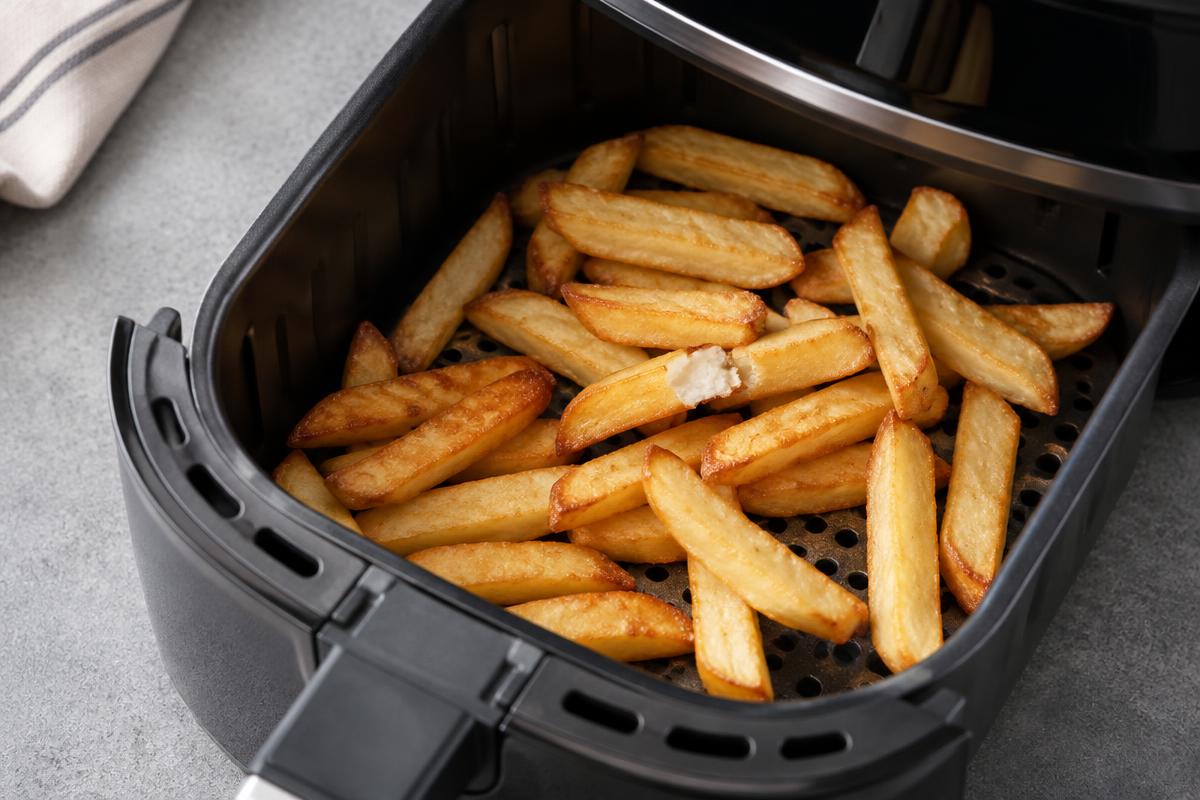
Air fryer potato wedges
Try Russet or King Edward for wedges with fluffy centres. Aim for reasonably even cuts, particularly at the thickest part of each wedge, to make cooking more consistent.
Air fryer roasted potato cubes
Yukon Gold gives cubes a creamier centre, while Maris Piper can develop a particularly crisp exterior. Keep the cubes similar in size and leave room around them for hot air to circulate.
Air fryer Hasselback potatoes
Yukon Gold and medium-sized Russets are useful choices. Pick evenly sized potatoes that are easy to slice. Make closely spaced cuts without going all the way through, keeping the base connected so the potato holds together.
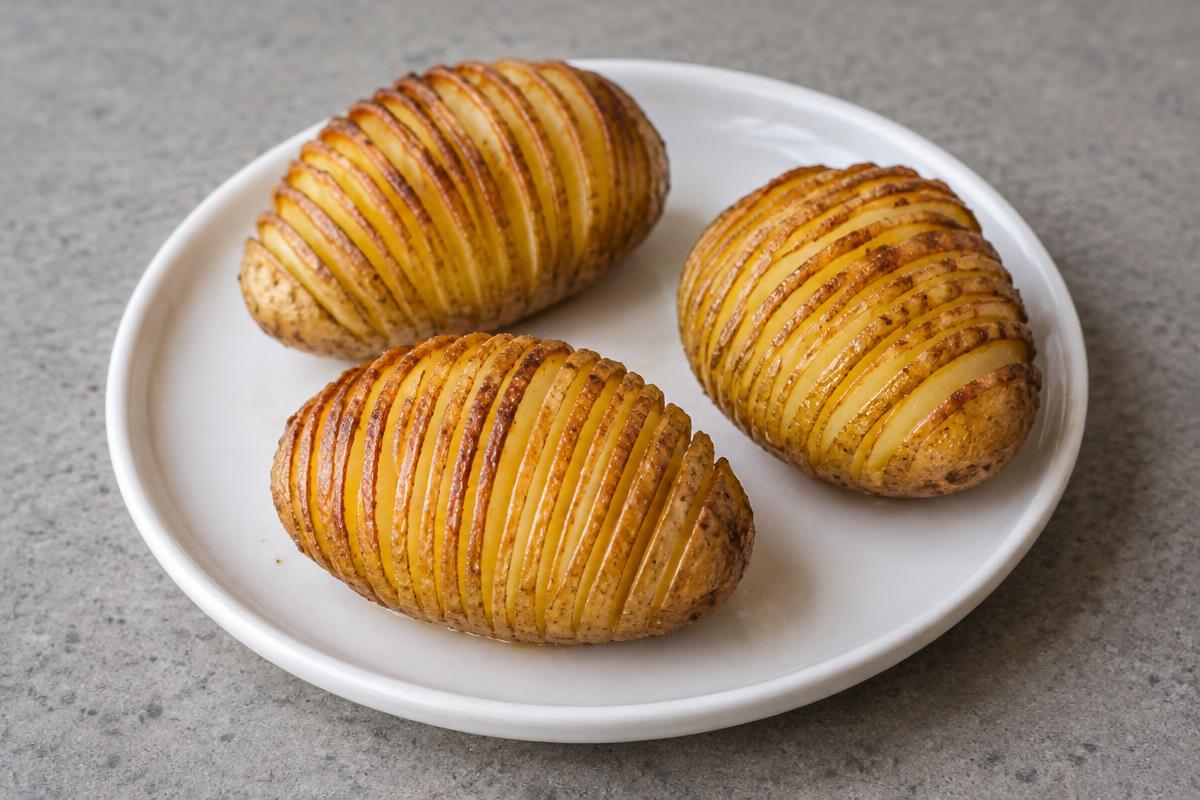
Air fryer baked potatoes
Russet is a strong choice for a baked potato. Its fluffy interior pairs well with a crisp skin. Choose similarly sized potatoes if you're cooking more than one, and check that the centres are tender.
Air fryer baby potatoes
Baby or new potatoes, including suitable waxy varieties, work well roasted whole when small. Halve larger ones so the pieces are more consistent in size. Their tender skins can be left on after washing and checking them carefully.
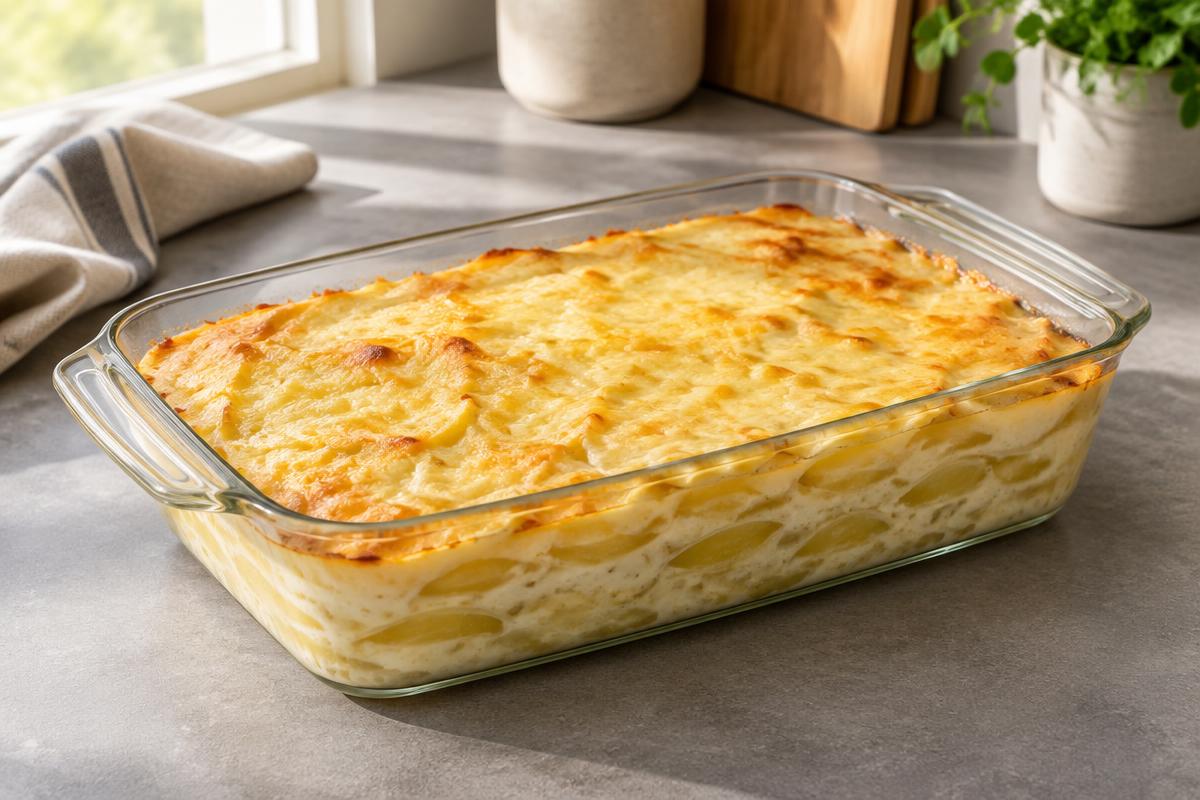
Air fryer potato gratin
Yukon Gold and other suitable all-purpose or moderately waxy potatoes retain enough structure to form distinct, tender layers. Gratin uses thinly sliced potatoes cooked in a creamy sauce, often with garlic and cheese depending on the variation. Traditional gratin dauphinois does not necessarily contain cheese, while cheesy potato gratin commonly does.
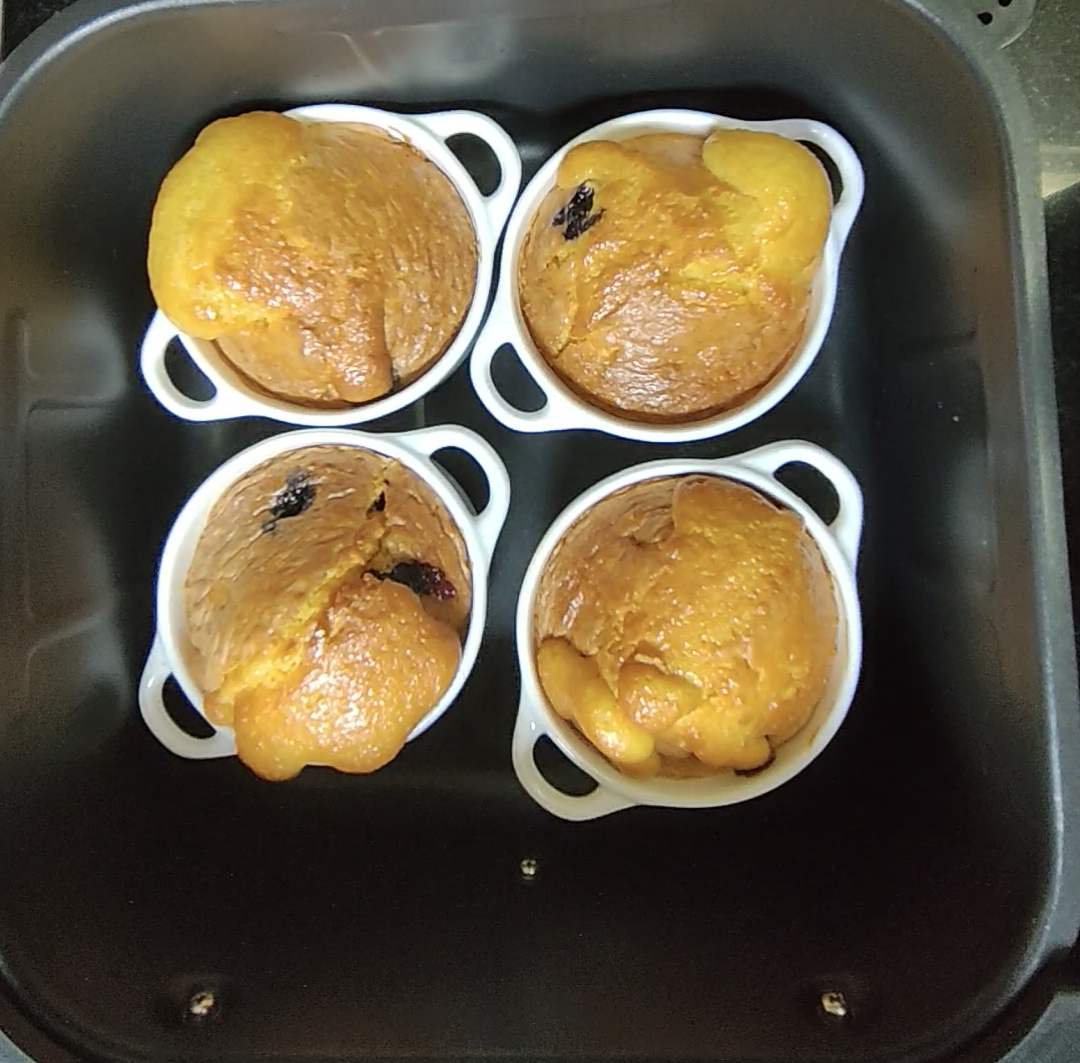
Use a suitable air fryer-compatible baking dish that fits your appliance, following the dish and air fryer manufacturers' instructions. A dish of potatoes in sauce cooks differently from loose chips or wedges: allow for the depth of the layers and check tenderness rather than judging only the golden top. What Containers Can You Put in an Air Fryer? explains how to choose an appropriate dish.
Practical Tips for Better Air Fryer Potatoes
For more help with browning and basket space, see Why Is My Air Fryer Food Not Crispy? and Why Is My Air Fryer Cooking Unevenly? 7 Common Causes and Easy Fixes.
- Cut pieces to similar sizes so they cook more evenly.
- Dry the surfaces well when you want crispness. Wet potatoes tend to steam before they brown.
- Use a modest amount of oil to coat the surfaces rather than leaving the potatoes sitting in oil.
- Avoid overcrowding the basket. Space lets hot air reach more of each piece.
- Soaking cut chips can help remove surface starch. If you soak them, drain and dry them thoroughly before air frying.
- Parboiling can help with crisp roast potatoes by softening the outside before roasting, especially for suitable floury varieties.
- Soaking and parboiling aren't required for every dish. Whole baby potatoes, baked potatoes and creamy gratin have different needs.
- Treat gratin as a layered dish in sauce, not as crisp loose potatoes. The middle needs to become tender even if the top has already browned.
- Variety, cut size, appliance and quantity all affect cooking time. Use recipe guidance as a starting point and check your own batch.
- Preheating and turning aren't universal requirements; follow your appliance's instructions and the needs of the dish.
How to Store Potatoes
Raw potatoes generally keep best in a cool, dark, dry and well-ventilated place. Avoid prolonged sunlight and excessive warmth, and don't seal them in a damp, airless container.
For potatoes intended for high-temperature frying, a cool cupboard is a useful starting point. Cold storage can increase reducing sugars in some potatoes and encourage darker browning. Household refrigeration advice varies with local guidance, variety and storage conditions, so follow current advice where you live rather than treating this as an absolute ban on refrigeration.
Check green areas, sprouts and signs of spoilage carefully. Discard potatoes that are extensively green, bitter, soft or deteriorating. Don't taste a suspect potato to decide whether it's safe, and don't assume cooking will make a badly green or spoiled potato suitable to eat. There isn't one guaranteed storage life for every variety or home.
Frequently Asked Questions
What is the best potato for air fryer chips?
Russet and Maris Piper are useful choices for crisp outsides and fluffy centres. If neither is available, look for a floury potato recommended for chips.
Are Russet potatoes good for mashed potatoes?
Yes. Their floury flesh breaks down readily and makes fluffy mash. Avoid overworking it, which can make the texture gluey.
What is the difference between waxy and floury potatoes?
Waxy potatoes generally hold their shape and stay firm when cooked. Floury potatoes have more starch and tend to become fluffy or break apart.
Which potatoes are best for Hasselback potatoes?
Yukon Gold and medium-sized Russets work well. Even size and a shape that's easy to slice are helpful too.
Which potatoes work best for potato gratin?
Yukon Gold and suitable all-purpose or moderately waxy potatoes give tender layers that retain some structure in the creamy sauce.
Do I need to soak potatoes before air frying?
Not always. Soaking cut chips may help remove surface starch, but it isn't necessary for every potato dish. Dry soaked potatoes thoroughly when crispness is the goal.
Should I peel potatoes before air frying?
It depends on the dish and your preference. Clean, sound skins can be left on for wedges, baked potatoes and many baby potatoes. Peel when you want a smoother finish, and discard unsuitable potatoes rather than relying on peeling to rescue them.
Can I use baby potatoes in an air fryer?
Yes. Small baby potatoes can be air fried whole; halve larger ones for more even cooking. Check that they're tender inside before serving.
The Final Takeaway
Choose floury potatoes for a fluffy interior and crisp finish, waxy potatoes for pieces that hold their shape, and versatile yellow-fleshed potatoes for a balance of tenderness and structure.
You won't find every variety in every country, so use the texture descriptions to guide you. Try different varieties with your favourite dishes and see which results you enjoy most.