Ingredient Guides
Cooking with Cheese: Which Cheeses Melt, Stretch, Brown or Hold Their Shape?
Cheese can make a simple dish feel completely different. A little cheddar adds flavour to a filling, mozzarella gives you that lovely stretchy texture, and Parmesan can bring a savoury finish to pasta or roasted vegetables.
But cheeses don't all behave the same way when heated. Some melt into a smooth sauce, others stretch into long strands, and some soften while keeping their shape.
Understanding these differences makes it easier to choose the right cheese for whatever you're cooking.
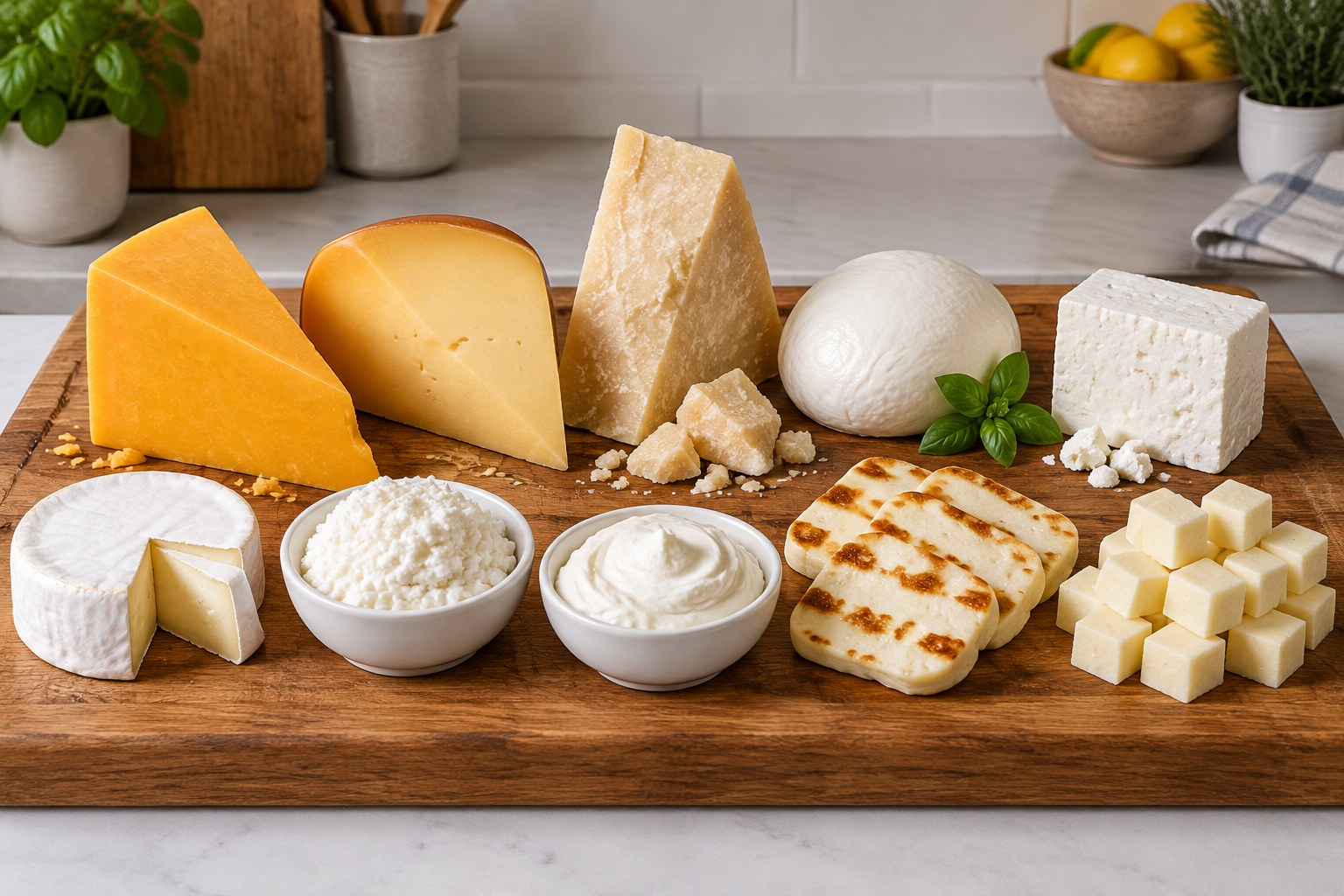
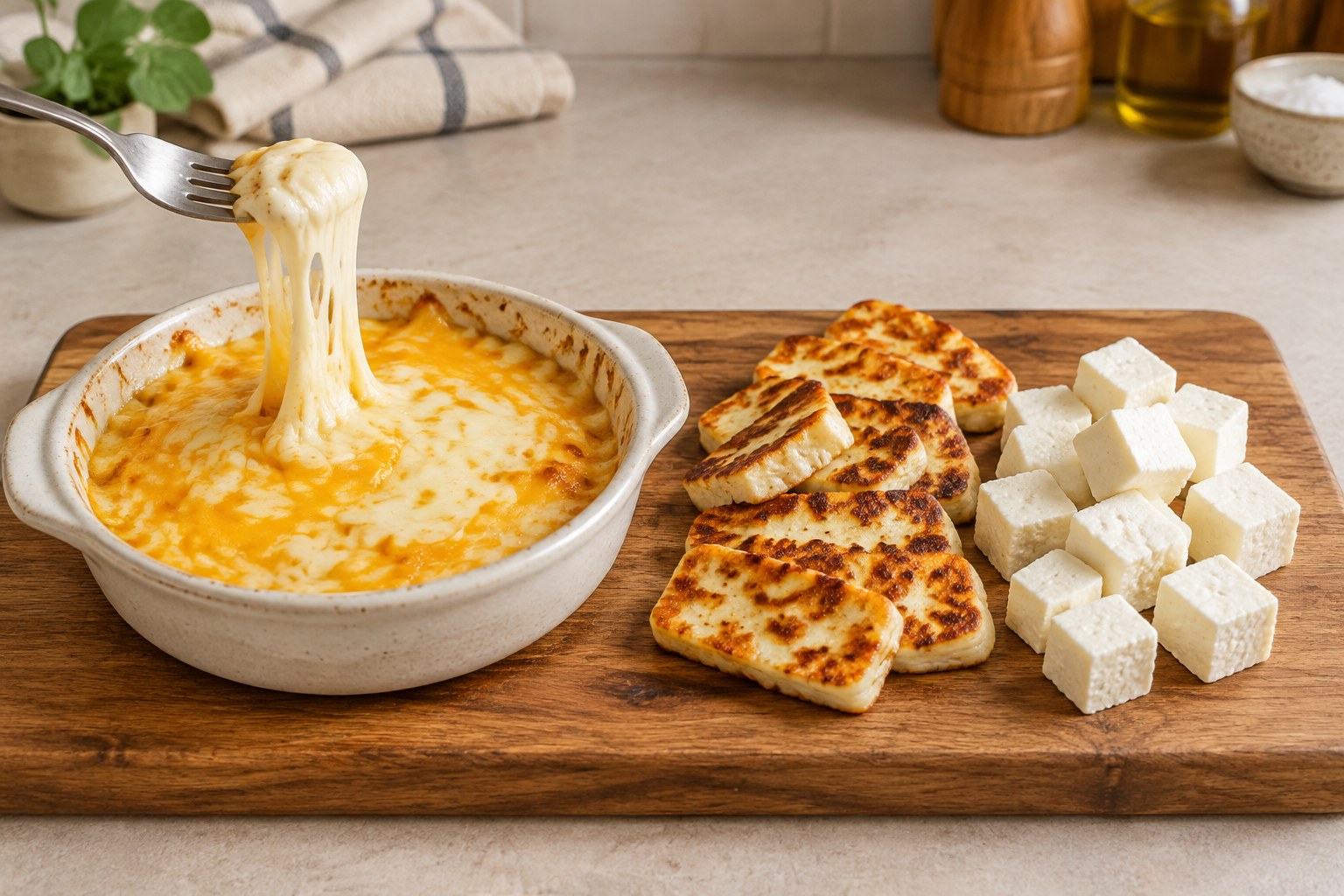
The images in this guide are AI-generated editorial illustrations.
By Esther LackiePublished
Why do cheeses melt differently?
The way cheese responds to heat depends largely on its moisture, fat, acidity, protein structure and how long it has been aged.
Cheese contains a network of proteins called casein, which holds water and fat. Heating changes this structure, but the result depends on the cheese.
Generally, cheeses with suitable moisture, fat and acidity melt more readily. Very dry cheeses may need added moisture to blend smoothly, while certain fresh or brined cheeses retain their shape.
Age matters too. As cheese matures, its protein structure changes, affecting how it melts and stretches.
That's why mozzarella behaves differently from feta, even though both are cheeses.
For more on the science behind these differences, see Cheese Science Toolkit, Cheese Melt and Stretch and Scientific American’s explanation of why cheeses melt differently.
Source: Cheese Science Toolkit, Cheese Melt and Stretch; Scientific American, Why Cheeses Such as Mozzarella and Cheddar Melt Differently Than Ricotta
Cheese comparison: Which type should you use?
| Cheese | Behaviour when heated | Good cooking uses |
|---|---|---|
| Mozzarella | Melts and stretches | Pizza, pastry fillings, baked dishes |
| Cheddar | Melts, adds rich flavour, may separate if overheated | Sandwiches, fillings, sauces |
| Gouda | Generally melts smoothly, depending on age | Toasties, sauces, baked potatoes |
| Gruyère | Melts well with a nutty flavour | Gratins, sauces, toasted sandwiches |
| Parmesan | Softens and blends best when finely grated into moist dishes | Pasta, sauces, finishing |
| Feta | Softens but generally holds its shape | Salads, baked vegetables |
| Halloumi | Softens, browns and largely retains its shape | Grilling, air frying, salads |
| Paneer | Holds its shape rather than melting into a sauce | Curries, skewers, frying |
| Cream cheese | Softens into a creamy texture | Fillings, dips, sauces |
| Ricotta | Remains relatively grainy or creamy rather than stretchy | Stuffed pasta, baking, fillings |
| Brie | Becomes soft and runny inside its rind | Baked cheese, pastry fillings |
- Mozzarella
- Behaviour when heated: Melts and stretches
- Good cooking uses: Pizza, pastry fillings, baked dishes
- Cheddar
- Behaviour when heated: Melts, adds rich flavour, may separate if overheated
- Good cooking uses: Sandwiches, fillings, sauces
- Gouda
- Behaviour when heated: Generally melts smoothly, depending on age
- Good cooking uses: Toasties, sauces, baked potatoes
- Gruyère
- Behaviour when heated: Melts well with a nutty flavour
- Good cooking uses: Gratins, sauces, toasted sandwiches
- Parmesan
- Behaviour when heated: Softens and blends best when finely grated into moist dishes
- Good cooking uses: Pasta, sauces, finishing
- Feta
- Behaviour when heated: Softens but generally holds its shape
- Good cooking uses: Salads, baked vegetables
- Halloumi
- Behaviour when heated: Softens, browns and largely retains its shape
- Good cooking uses: Grilling, air frying, salads
- Paneer
- Behaviour when heated: Holds its shape rather than melting into a sauce
- Good cooking uses: Curries, skewers, frying
- Cream cheese
- Behaviour when heated: Softens into a creamy texture
- Good cooking uses: Fillings, dips, sauces
- Ricotta
- Behaviour when heated: Remains relatively grainy or creamy rather than stretchy
- Good cooking uses: Stuffed pasta, baking, fillings
- Brie
- Behaviour when heated: Becomes soft and runny inside its rind
- Good cooking uses: Baked cheese, pastry fillings
These are general characteristics. Moisture, age, fat content and individual products can change the results.
Mozzarella: Best for stretch
Mozzarella is one of the most useful cheeses when you want a soft, stretchy filling.
Low moisture mozzarella is particularly convenient for pizza, pastries and baked dishes because it introduces less water than fresh mozzarella.
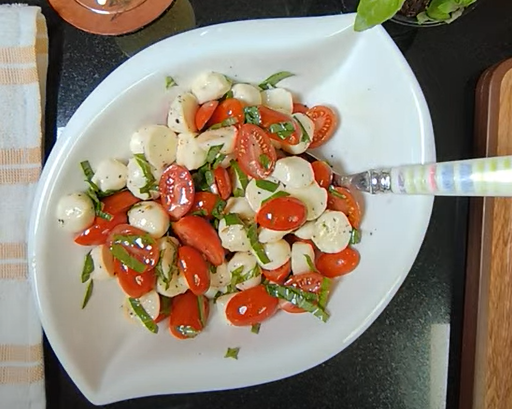
Fresh mozzarella has a delicate texture and higher moisture content. It's lovely in salads and selected baked dishes, but excess moisture can make pastry or pizza bases soggy.
For stuffed pastries and hot pockets, low moisture mozzarella is often the more practical choice.
For a mozzarella-filled pastry idea, see Air Fryer Ham and Cheese Croissant Sandwiches. For fresh mozzarella served without cooking, try Caprese Style Salad.
Cheddar: Best for flavour
Cheddar brings a stronger savoury flavour than mozzarella, although its intensity depends on how mature it is.
Younger cheddar generally melts more readily than very mature cheddar.
When heated too aggressively, cheddar can become oily or grainy as its fat and proteins separate.
For cheese sauces, use gentle heat and avoid prolonged boiling.
Cheddar and mozzarella also work well together when you want both flavour and stretch.
Air Fryer Beef and Double Cheese Puff Pastry Hot Pockets combines cheddar and mozzarella in an enclosed puff pastry filling.
Parmesan: Best for savoury depth
Parmesan is a hard, aged cheese with relatively little moisture.
It doesn't behave like mozzarella when heated. Instead of stretching into long strands, finely grated Parmesan can blend into moist dishes and contribute a concentrated savoury flavour.
Add it gradually to warm sauces or pasta with enough liquid to help it disperse.
Parmesan also works as a finishing ingredient over vegetables, potatoes and other savoury dishes.
Feta: Best when you want cheese to keep some texture
Feta softens when heated but doesn't usually melt into a stretchy layer.
Its crumbly texture and salty flavour make it useful in salads, vegetable dishes and selected pastry fillings.
Because feta is already salty, taste your dish before adding extra salt.
Halloumi and paneer: Cheeses that hold their shape
Halloumi and paneer are useful when you want pieces of cheese that remain recognisable after cooking.
Halloumi can develop a golden surface when grilled, pan fried or air fried. Its distinctive texture remains relatively firm.
Paneer is commonly used in curries and other cooked dishes because it holds its shape rather than flowing into a sauce.
Avoid assuming that all firm cheeses behave this way. Some hard cheeses soften or melt very differently.
Cream cheese, ricotta and Brie
Cream cheese adds richness to dips, sauces and fillings. Gentle heating and mixing can help produce a creamy consistency.
Ricotta is useful in stuffed pasta, pastries and baked dishes. It doesn't provide the same stretch as mozzarella.
Brie becomes soft and runny when heated, particularly inside its rind, making it suitable for selected baked dishes and pastry fillings.
The right choice depends on whether you want creaminess, structure or stretch.
For a cream cheese filling, see Air Fryer Spinach and Cream Cheese Stuffed Salmon.
Which cheeses are best for air frying?
For air fryer cooking, think about whether the cheese is enclosed inside food or exposed directly to circulating hot air.
Mozzarella and cheddar can work well inside stuffed pastries, sandwiches and other fillings.
Halloumi is a practical option for cooking in pieces because it generally holds its shape.
Exposed shredded cheese may brown quickly, dry out or blow around in the airflow. It can also drip through the basket.
Where appropriate, add exposed cheese towards the end of cooking, and make sure fillings are properly enclosed.
Why does cheese sometimes turn oily?
When cheese is overheated, fat can separate from its protein and moisture.
The result may be a greasy surface or a sauce that looks split.
Cheese type, cooking temperature, moisture and heating time all influence this behaviour.
Try gentler heat for sauces and avoid cooking cheese for longer than necessary.
Why does cheese sometimes become rubbery?
Prolonged heating can cause moisture loss and changes in the cheese's protein structure.
Some cheeses naturally have a firmer or springier texture, while others become tougher after excessive heating.
Choose a cheese suited to the dish and avoid assuming that more heat will always improve the melt.
The research article Moisture Loss from Cheese During Baking explores moisture changes during heating.
Source: Research article, Moisture Loss from Cheese During Baking
Is freshly grated cheese better than pre-shredded cheese?
Freshly grated cheese is often a good choice for smooth sauces because it avoids some of the anti-caking ingredients used in packaged shredded cheese.
Pre-shredded cheese is convenient and can work well for many baked dishes.
Neither is automatically better for every recipe. Check the product ingredients and choose according to the result you want.
Can you mix different cheeses?
Absolutely.
Combining cheeses can give you a balance of flavour, creaminess and stretch.
For example:
- Mozzarella and cheddar: stretch with stronger flavour
- Mozzarella and Parmesan: mild melting cheese with savoury depth
- Gouda and cheddar: creamy melting qualities with a richer taste
- Ricotta and Parmesan: a creamy filling with extra savoury flavour
Start with combinations that suit the dish rather than adding several cheeses simply because they're available.
How should cheese be stored?
Follow the packaging instructions and refrigerate cheeses that require refrigeration.
Soft cheeses generally have shorter storage lives than hard cheeses.
Keep opened cheese appropriately wrapped or in suitable food storage containers to protect it from drying out and contamination.
Hard cheeses such as cheddar and Parmesan often last longer in the refrigerator than fresh soft cheeses, but storage life depends on the product and handling.
Freezing can affect texture, particularly in soft cheeses. Some frozen cheeses are better used in cooked dishes after thawing.
If soft cheese develops unexpected mould, discard it rather than trying to cut the mould away. Follow recognised food safety guidance for mould on hard cheeses.
For further storage guidance, see the USDA advice on cheese refrigeration and the USDA advice on dairy storage life.
Source: USDA Food Safety and Inspection Service, Does All Cheese Need to Be Refrigerated?; USDA Food Safety and Inspection Service, How Long Can You Keep Dairy Products in the Refrigerator?
Frequently asked questions
Which cheese is best for stretchy fillings?
Low moisture mozzarella is a practical choice for stretchy fillings in pastries, pizza and sandwiches.
Which cheese melts best for sauces?
Young cheddar, Gouda and Gruyère can work well, depending on the sauce. Gentle heating and sufficient moisture are important.
Can feta melt like mozzarella?
No. Feta generally softens while retaining a crumbly structure rather than becoming stretchy.
Can you air fry halloumi?
Yes. Halloumi can brown while largely retaining its shape. Follow a suitable recipe and monitor it during cooking.
Why does cheese leak out of puff pastry?
Cheese can escape when pastry seams are not properly sealed, the filling is excessive, or the cheese melts before the pastry structure is sufficiently set.
Does mature cheddar melt better than mild cheddar?
Not necessarily. Mature cheddar develops stronger flavour, but younger cheddar often melts more readily.
Can you freeze grated cheese?
Many hard and semi-hard grated cheeses can be frozen, although texture may change. Use appropriate packaging and follow food safety storage guidance.
Final thoughts
Choosing cheese for cooking is about more than picking your favourite flavour.
Mozzarella is useful for stretch, cheddar brings richness, Parmesan adds savoury depth, and cheeses such as halloumi and paneer are valuable when you want them to retain their shape.
Once you understand how different cheeses respond to heat, it becomes much easier to choose the right one for your recipes.
A little knowledge can save you from watery fillings, oily sauces and disappointing melted cheese.
Sources and Further Reading
- Cheese Science Toolkit — Cheese Melt and Stretch
- Scientific American — Why Cheeses Such as Mozzarella and Cheddar Melt Differently Than Ricotta
- Research article — Moisture Loss from Cheese During Baking
- USDA Food Safety and Inspection Service — Does All Cheese Need to Be Refrigerated?
- USDA Food Safety and Inspection Service — How Long Can You Keep Dairy Products in the Refrigerator?